

Photo: ©Adrián Vásquez-Archipiélago Films
A penguin near the equator sounds like a mistake.
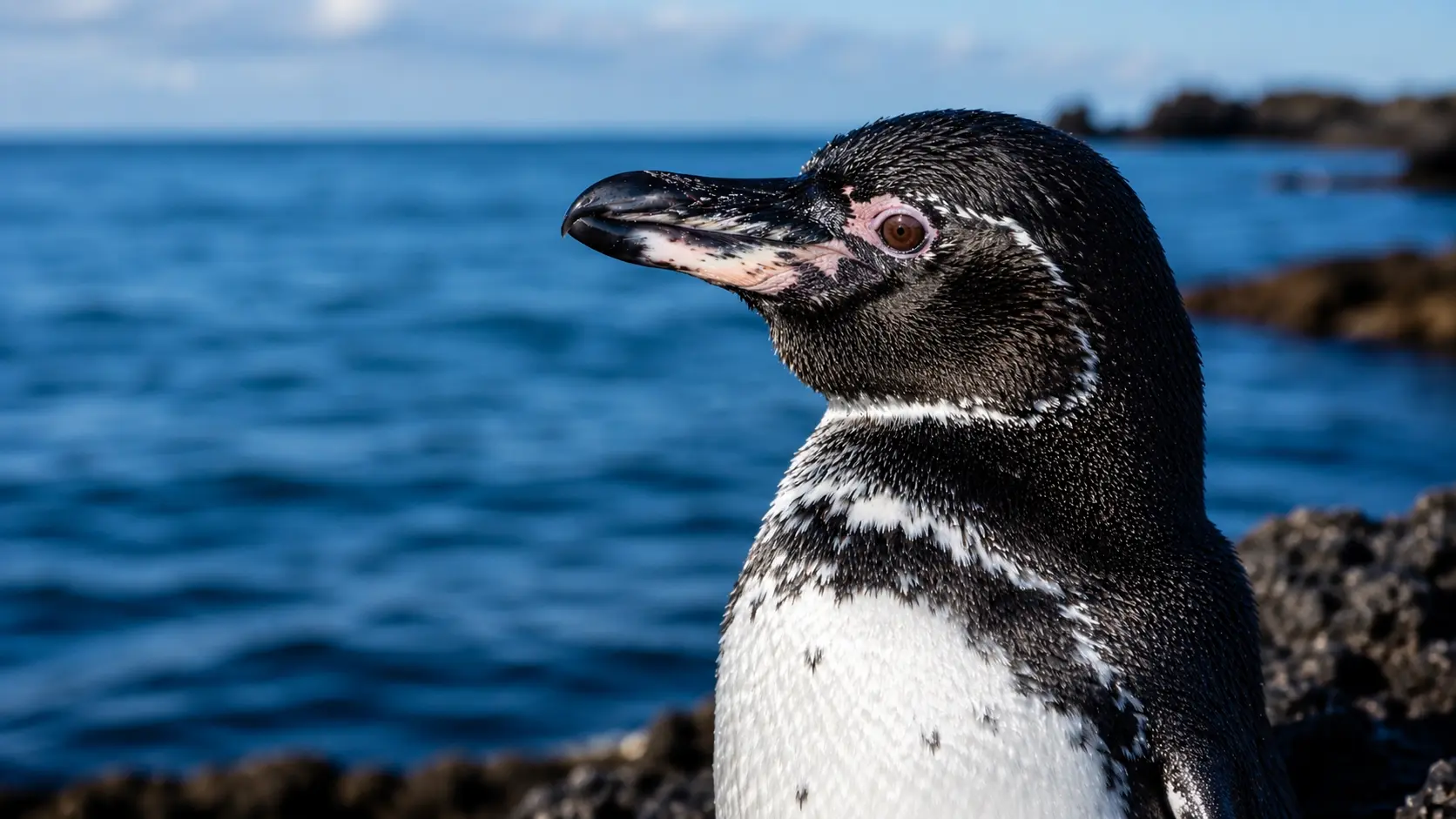
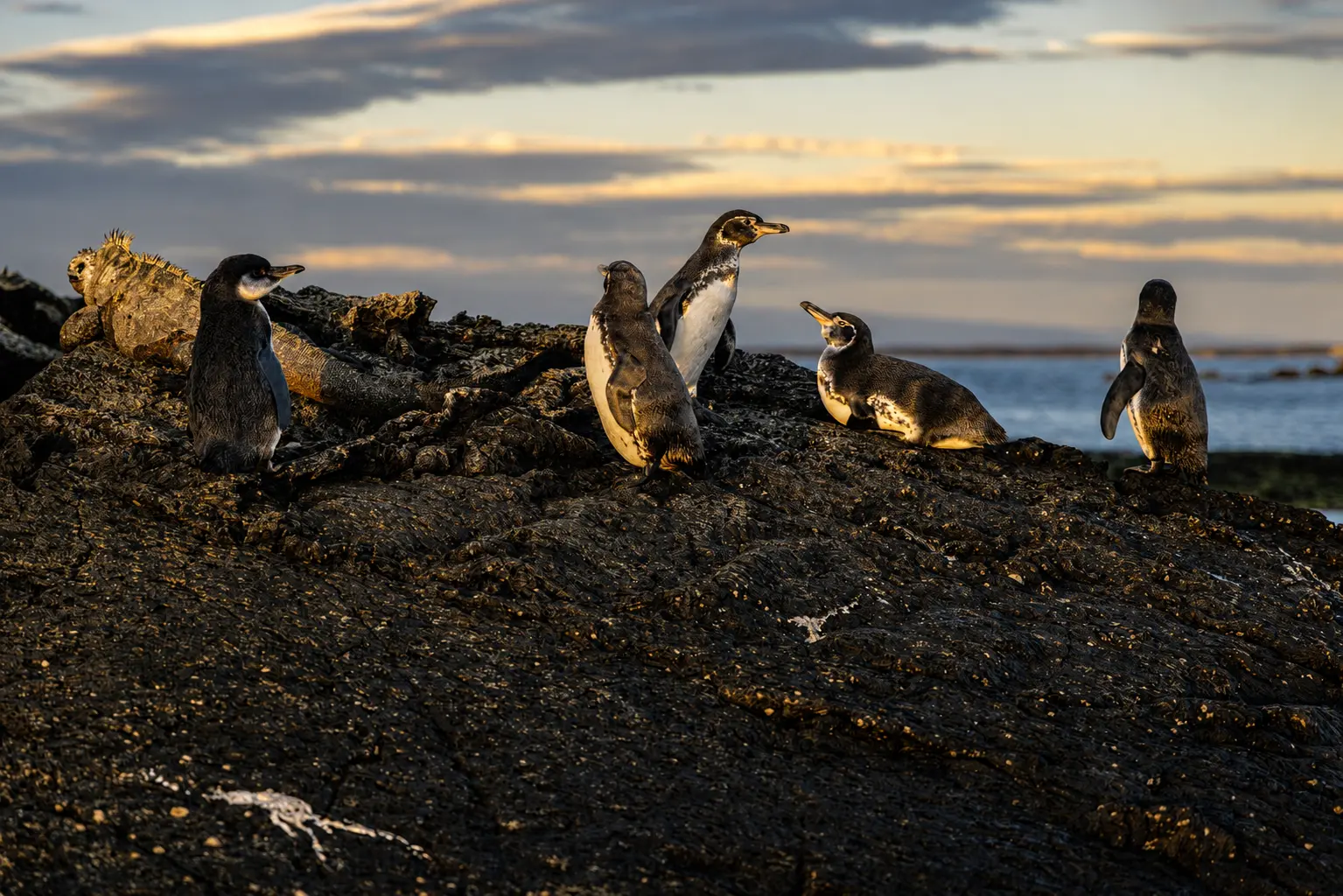
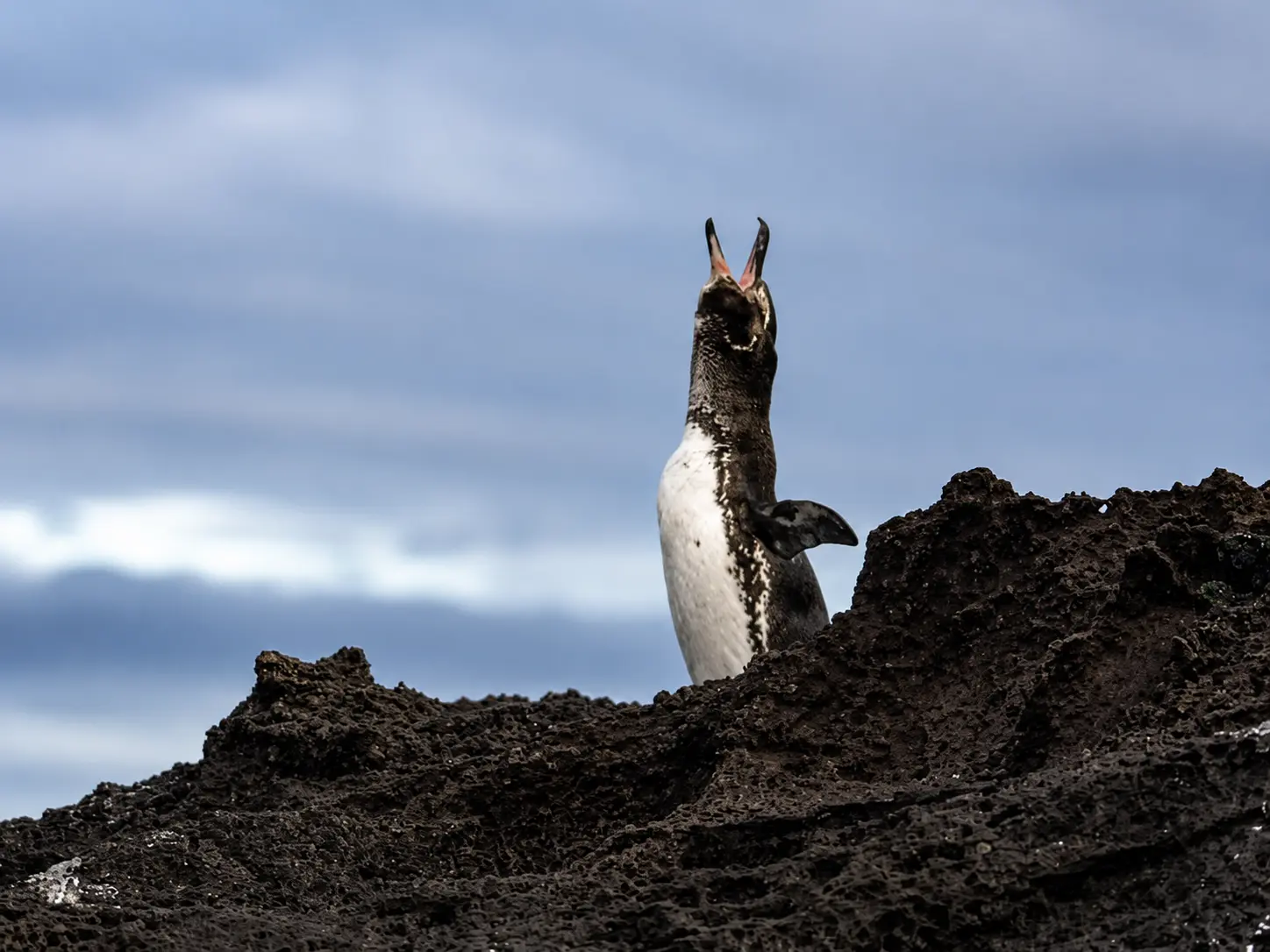
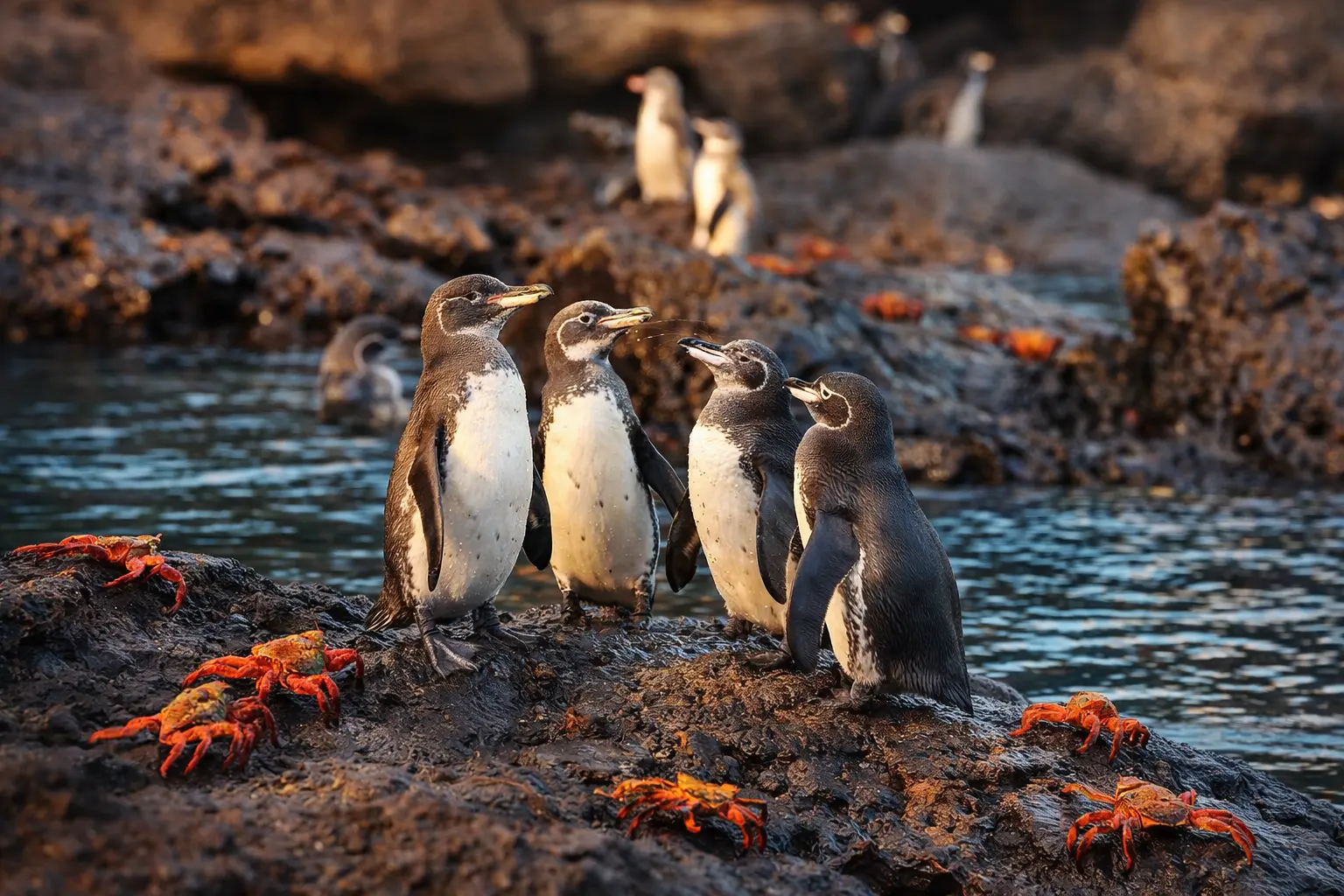
Most people imagine penguins on ice, standing in wind and snow at the bottom of the world. But in Galápagos, they appear in a very different setting: black lava, bright sun, blue water, and dry tropical shores.
The Galápagos penguin is one of the smallest penguins in the world. It is also the most northerly penguin species, found only in the Galápagos Islands. Some colonies live just north of the equator, along the northern edge of Isabela Island.
So how does a cold-water bird survive in a tropical archipelago?
The answer is not in the air. It is in the sea.
A tropical place with cold water
Galápagos sits on the equator, but its waters are not simply tropical.
The islands lie where major ocean currents meet. Cool, nutrient-rich waters reach the archipelago through the Humboldt Current and the Cromwell Current, also known as the Equatorial Undercurrent.
The Cromwell Current is especially important. It works like a cold river beneath the sea. As it reaches the western edge of the Galápagos platform, it is pushed upward, bringing deep, nutrient-rich water into the sunlight. That upwelling helps feed plankton, small fish, and the larger animals that depend on them.
That is the hidden engine behind the penguin’s life here.
The Galápagos penguin does not survive at the equator because the land is cold. It survives because parts of the surrounding ocean are cool, productive, and full of food.
A small penguin tied to cold water
Like all penguins, Galápagos penguins are birds of the sea.
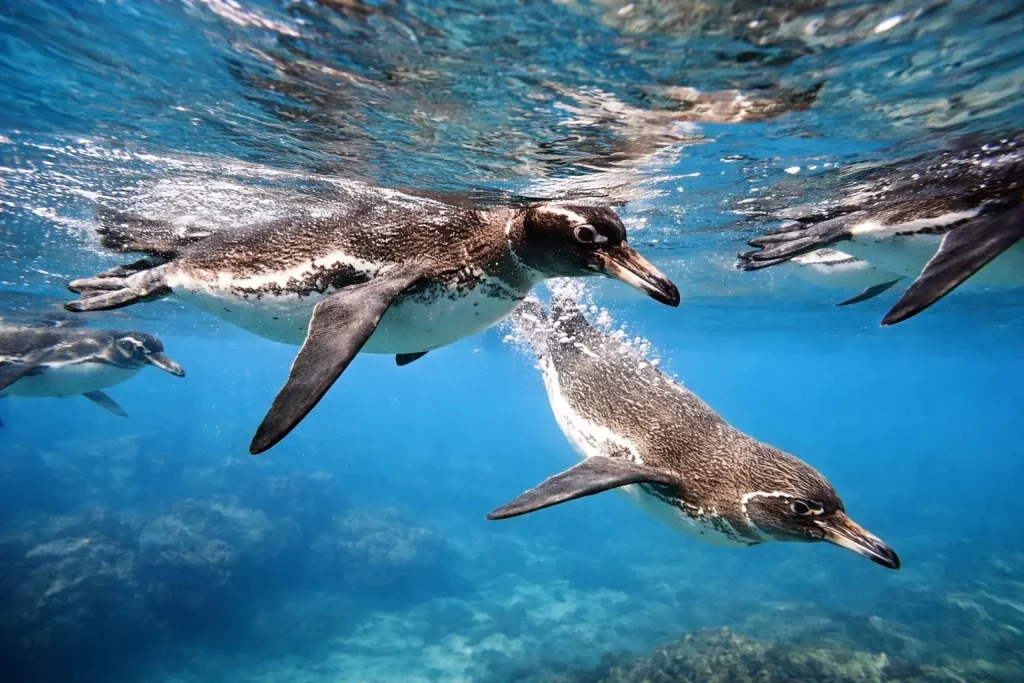
They cannot fly through the air, but underwater they are fast, agile hunters. Their wings work like flippers, their bodies are streamlined, and their dark-and-white pattern helps them move through the water while hunting small fish.
Their diet depends heavily on schooling fish, including anchovies, sardines, and mullet. These fish become more available when cold, nutrient-rich waters are strong. That is why the waters around western Galápagos, especially near Isabela and Fernandina, are so important.
For this bird, survival is not about finding ice. It is about finding fish.
Why the west matters
The western islands of Galápagos are especially important for penguins.
Isabela and Fernandina sit close to areas where cold subsurface water rises and feeds the marine food web. This helps explain why Galápagos penguins are not spread evenly across the archipelago. They are closely tied to places where the water stays cooler and food is more reliable.
That makes their world very specific.
On land, a Galápagos penguin may stand under tropical sun. At sea, it becomes a cold-water hunter. The contrast is part of what makes the species so surprising.
Heat is still a problem
Living near the equator is not easy for a penguin.
Even with cool water nearby, Galápagos penguins must cope with intense sunlight and warm air. They use shade, coastal crevices, and several small but important behaviors to avoid overheating. They may pant like a dog, hold their flippers away from the body to release heat, and lean forward so their own bodies shade their sensitive feet.
Their small size also helps. Compared with larger penguins from colder regions, Galápagos penguins have less body mass to overheat, making it easier to release excess heat in a tropical setting.
But the basic challenge remains: this is a cold-water bird living in a tropical setting.
That is why the Galápagos penguin is so remarkable. It survives in a narrow balance between two worlds — the hot shore and the cool, food-rich sea.
When the ocean warms
The same ocean system that makes life possible for Galápagos penguins can also make them vulnerable.
During El Niño events, sea temperatures rise and the cold, nutrient-rich waters that normally support the marine food web can weaken. When that happens, fish become harder to find, breeding may decline, and penguins can suffer serious population losses.
In that sense, the Galápagos penguin acts like a sentinel of the sea: when the cold-water engine weakens, its struggle can reveal stress across the marine food web.
This is why the penguin’s story cannot be separated from ocean conditions.
The Galápagos penguin is not simply rare because it lives in an unexpected place. It is rare because its survival depends on a delicate marine system that can shift quickly.
A bird that reveals the sea
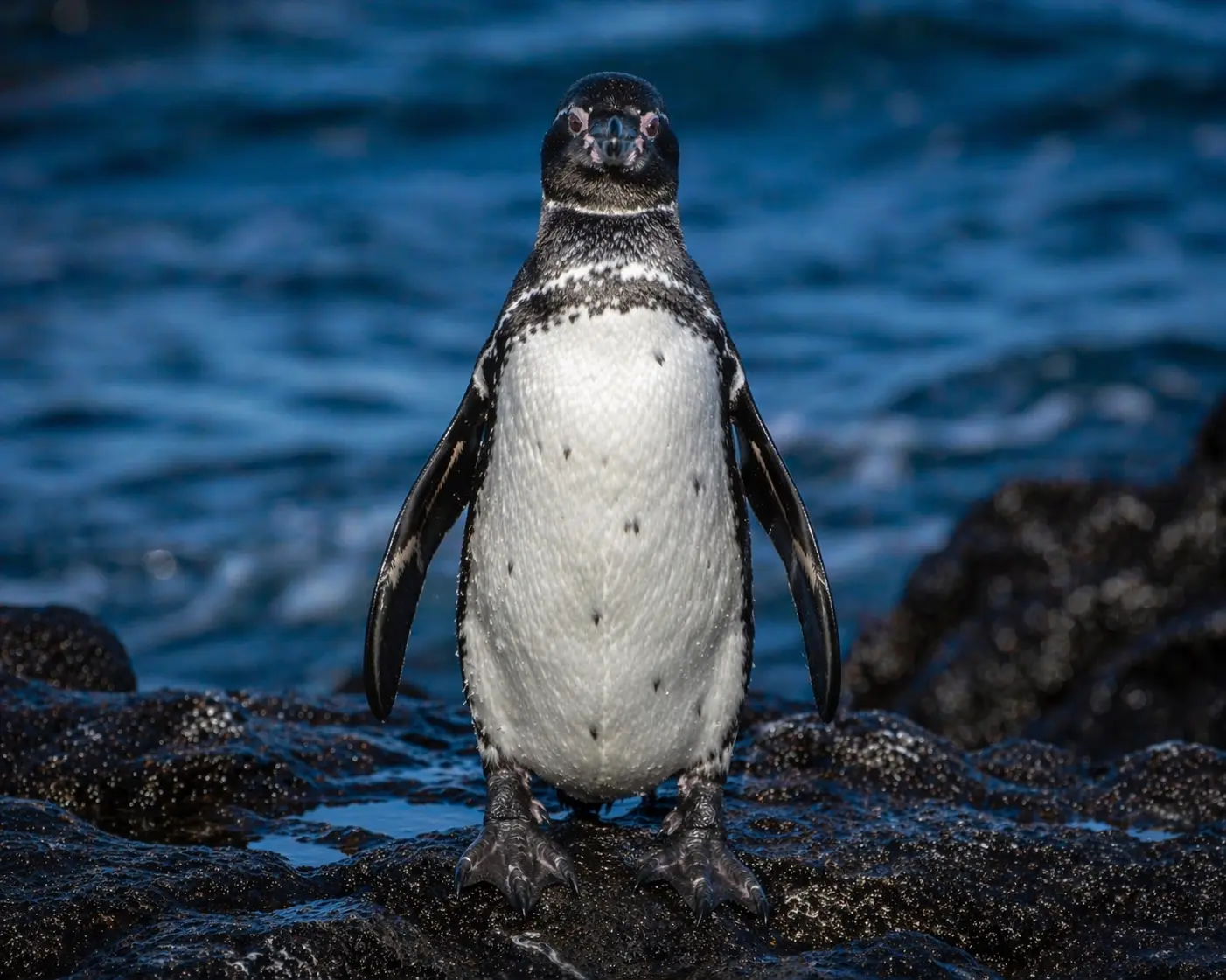
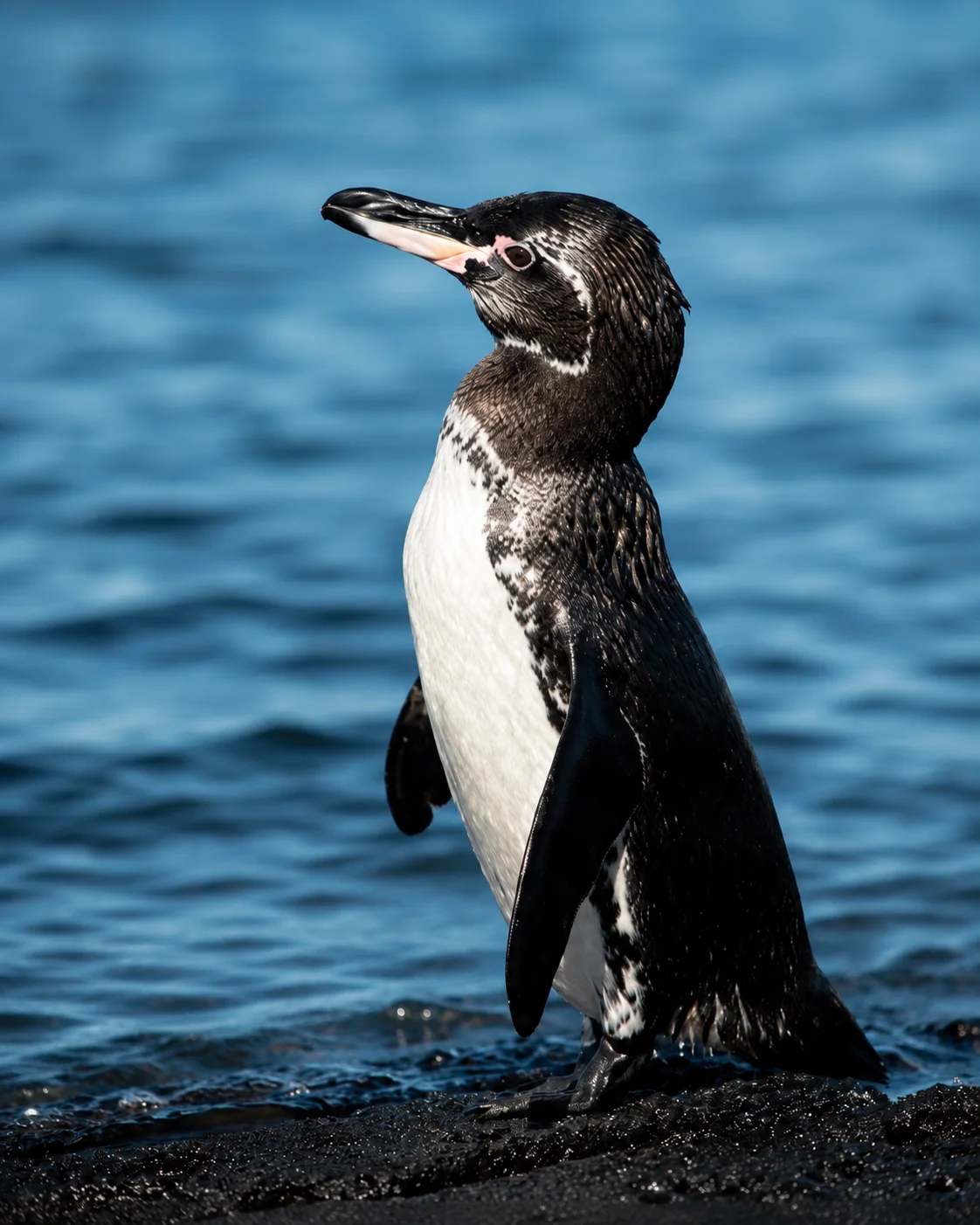
The Galápagos penguin is easy to recognize: small body, dark back, white belly, narrow white markings around the face, and a quick, direct movement through the water.
But what makes it extraordinary is not only how it looks. It is what it reveals.
This bird shows that Galápagos is not just a tropical archipelago. It is a meeting place of currents, temperatures, nutrients, and life. Cold water can rise beneath equatorial sun. Fish can gather near black volcanic shores. And a penguin can survive where most people would never expect one.
That is the real answer to the question.
Galápagos penguins live at the equator because the ocean makes it possible.
Not the ice. Not the land. The ocean.