

Quick Facts About Galápagos Wildlife
- Endemism: More than 80% of land birds and 97% of reptiles found here exist nowhere else on Earth.
- Protection: Most of the archipelago is protected within the Galápagos National Park and the Galápagos Marine Reserve.
- Research: Long-term scientific monitoring by Ecuadorian researchers and international institutions guides conservation decisions.
- Marine Wealth: The surrounding waters form one of the largest marine protected areas on the planet.
Few places on Earth are as extraordinary as the Galápagos Islands. These Galápagos endemic species reveal how life adapts to survive in one of the most unique environments on the planet.
At sunrise in the volcanic highlands, giant tortoises move slowly through mist-covered grasslands. Along the coast, marine iguanas slip into the Pacific to graze on algae beneath the waves. And in the cool waters of the western islands, penguins dart through the sea just south of the equator.
These animals are not simply unusual. They represent some of the most remarkable examples of natural adaptation found anywhere on the planet.
Because the islands lie more than 900 kilometers from mainland South America, every plant and animal that reached these shores had to arrive by sea or air. Over time, many species developed specialized traits that allow them to survive in volcanic landscapes, shifting ocean currents, and isolated island habitats.
Today, scientists and conservationists continue to study and protect these species through long-term programs led by the Galápagos National Park Directorate, in collaboration with Ecuadorian researchers and international institutions.
Below are eight of the most iconic animals found only in the Galápagos.
Animals Found Only in the Galápagos Islands
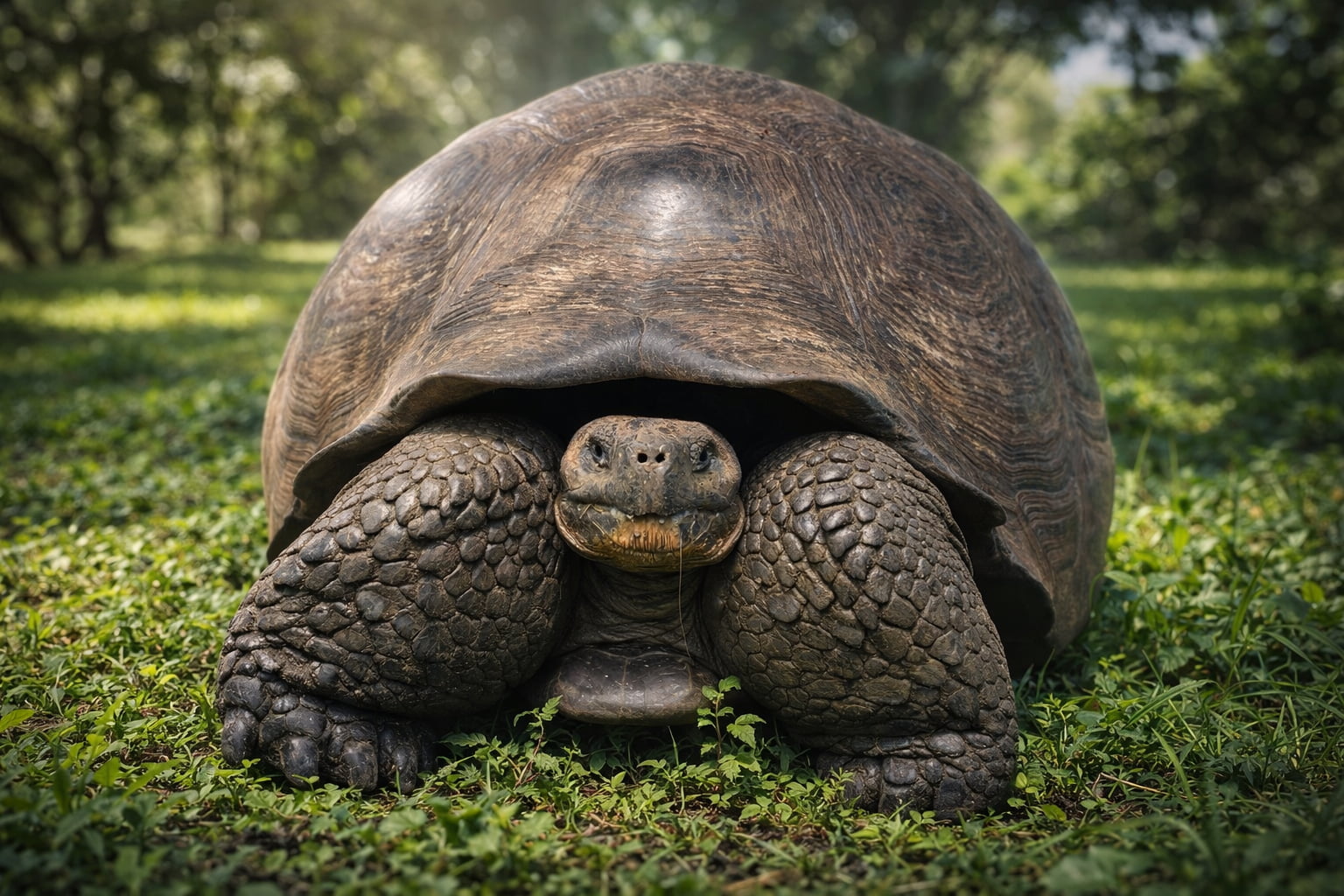
1. Galápagos Giant Tortoise
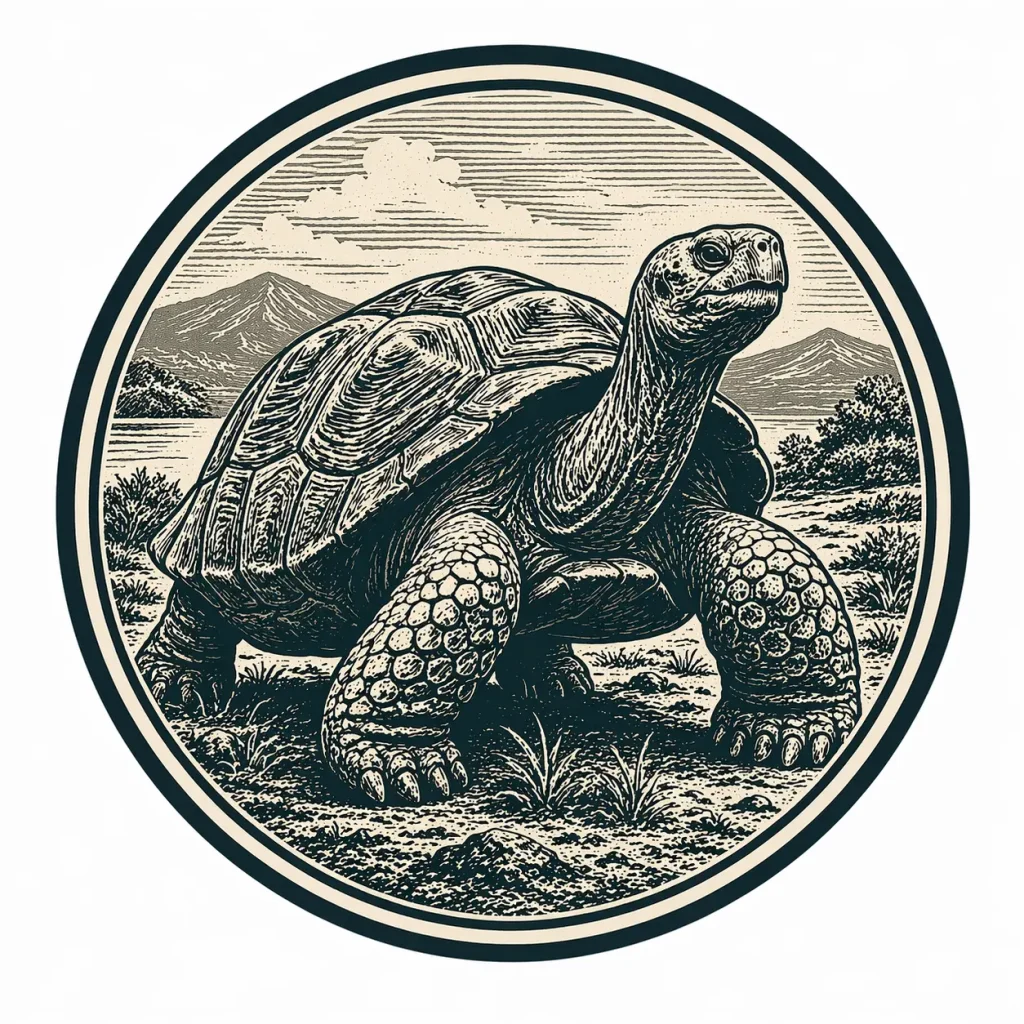
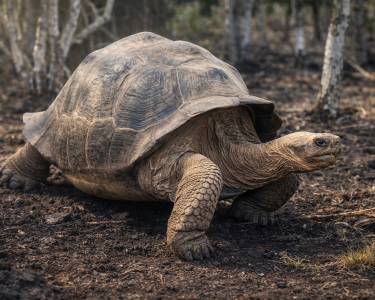
Few animals symbolize the islands more than the Galápagos giant tortoise. Some individuals weigh more than 400 kilograms and can live well beyond a century.
Their shells reveal a remarkable story of natural adaptation. Tortoises living in humid highlands tend to have domed shells, allowing them to move through dense vegetation. Those from drier islands developed saddleback shells, raised at the front so they can stretch their necks to reach tall cactus pads.
Once driven close to extinction by hunting and introduced species, giant tortoises are now recovering thanks to decades of conservation work.
2. Marine Iguana
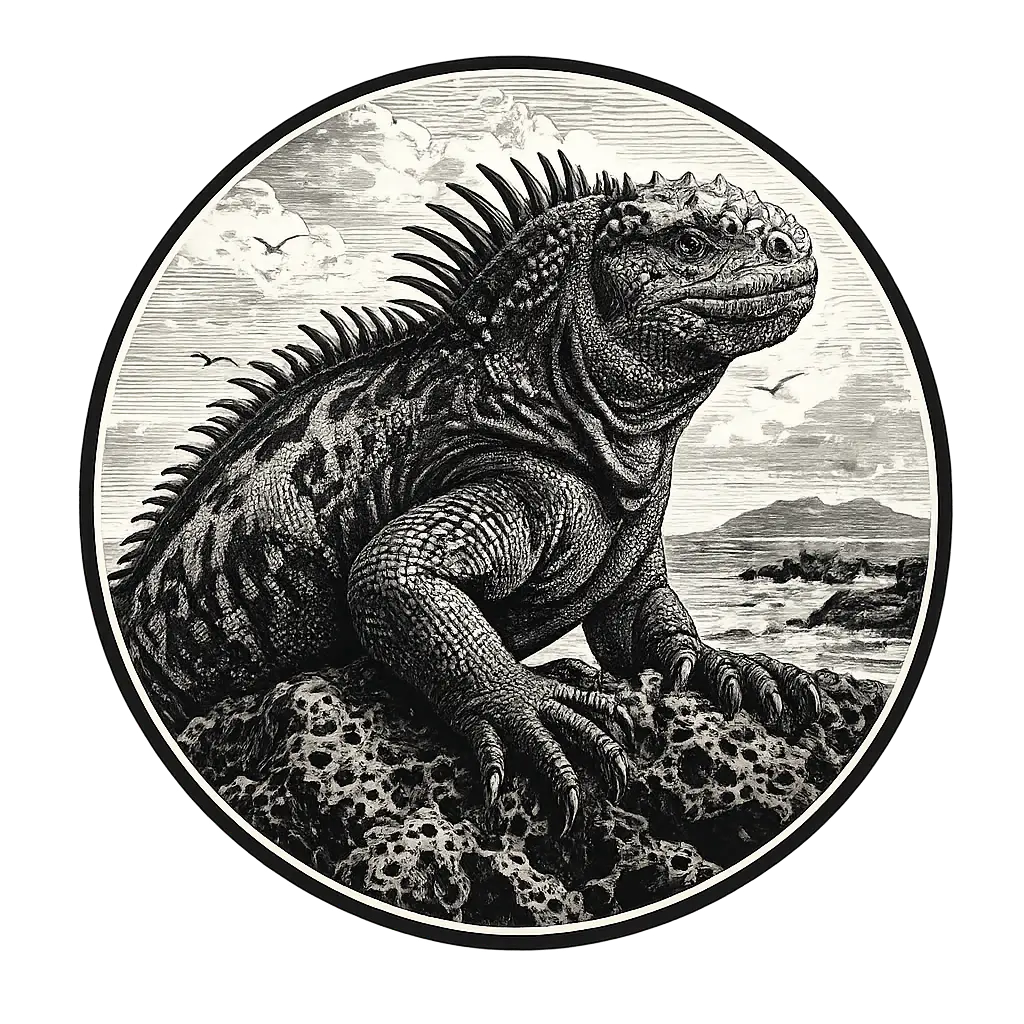
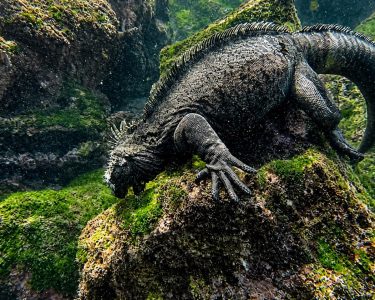
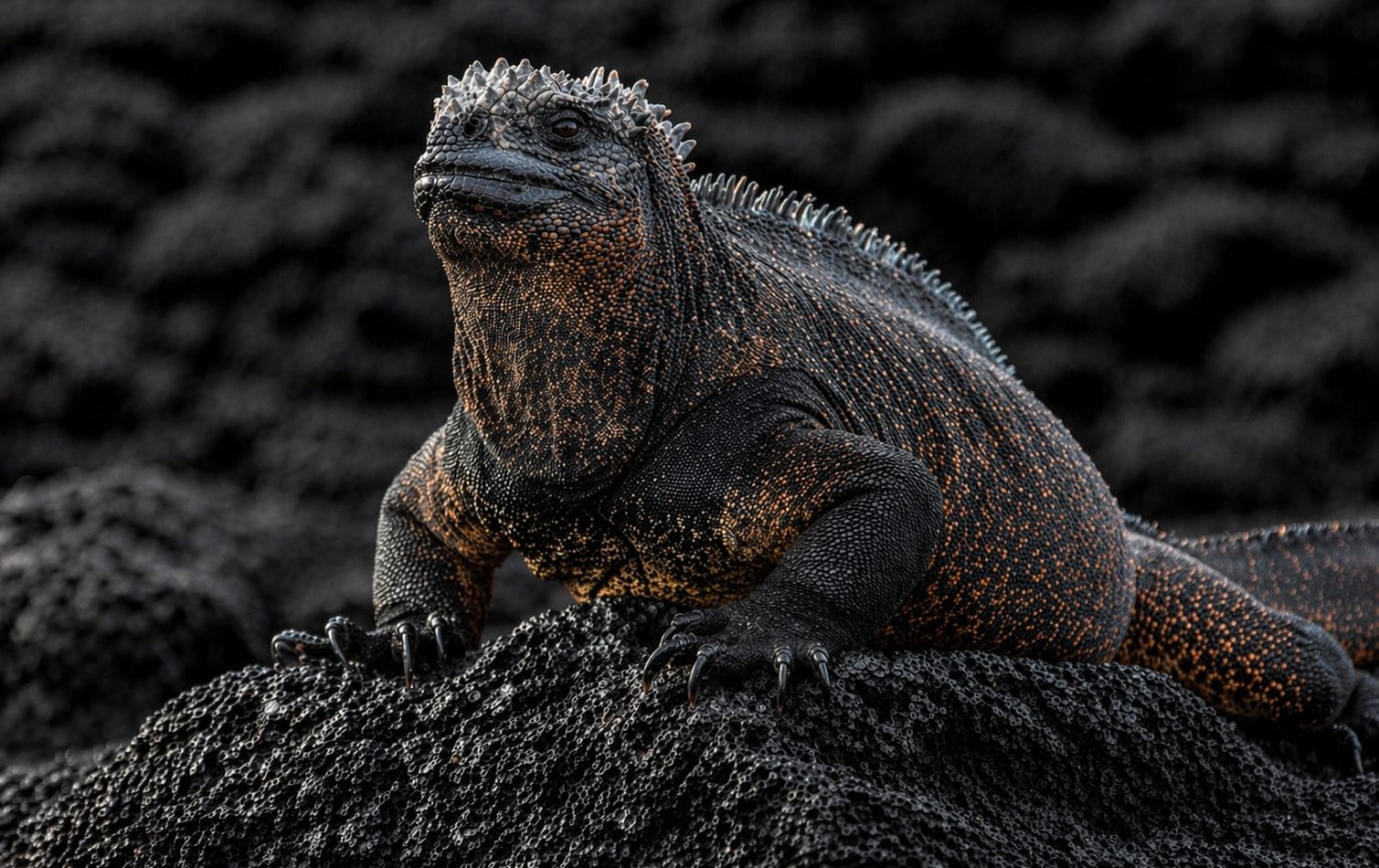
The marine iguana is the only lizard on Earth that forages in the ocean.
These dark reptiles gather along lava shores before diving into the Pacific to graze on algae growing on submerged rocks. Their blunt snouts and strong claws allow them to hold onto the seafloor as waves surge overhead.
Because they ingest seawater while feeding, marine iguanas possess specialized glands that allow them to expel excess salt through explosive sneezes—a striking adaptation to life in a marine environment.
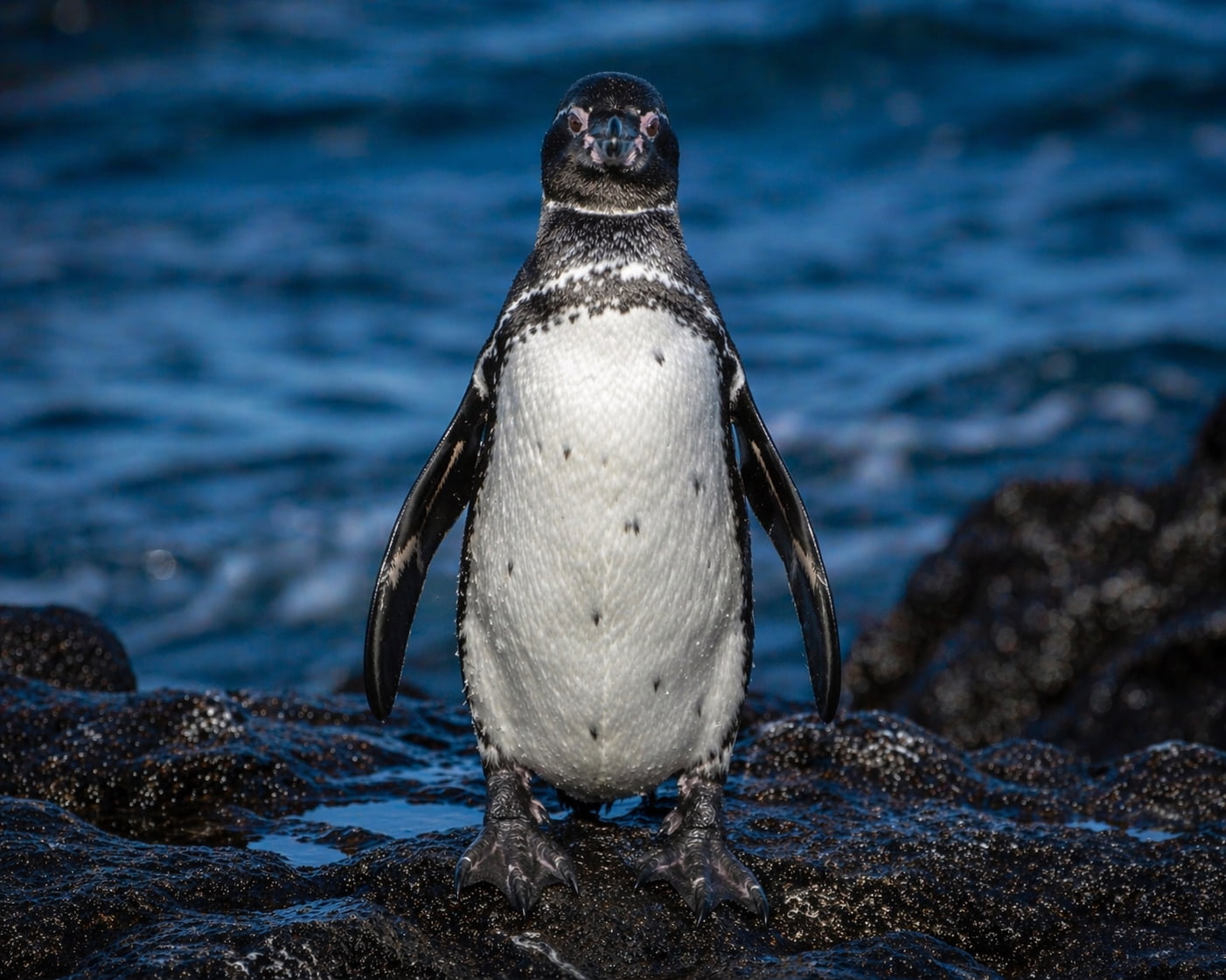
3. Galápagos Penguin
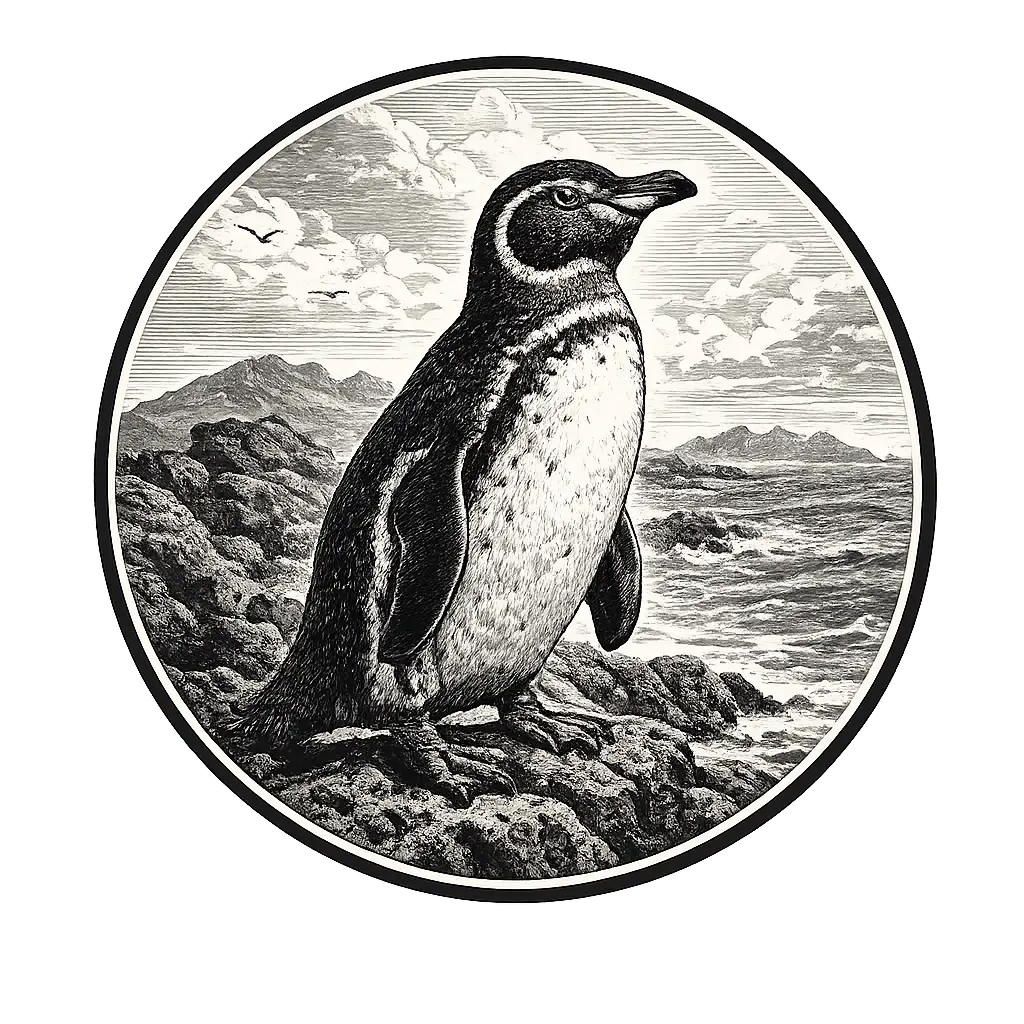
The Galápagos penguin is the only penguin species naturally found north of the equator.
Despite living in the tropics, it survives thanks to the cold, nutrient-rich waters brought by the Cromwell Current, which rises from the deep ocean near the western islands.
To cope with the heat, these penguins often hold their flippers away from their bodies and lean forward to shade their feet while resting on volcanic rock.
4. Flightless Cormorant
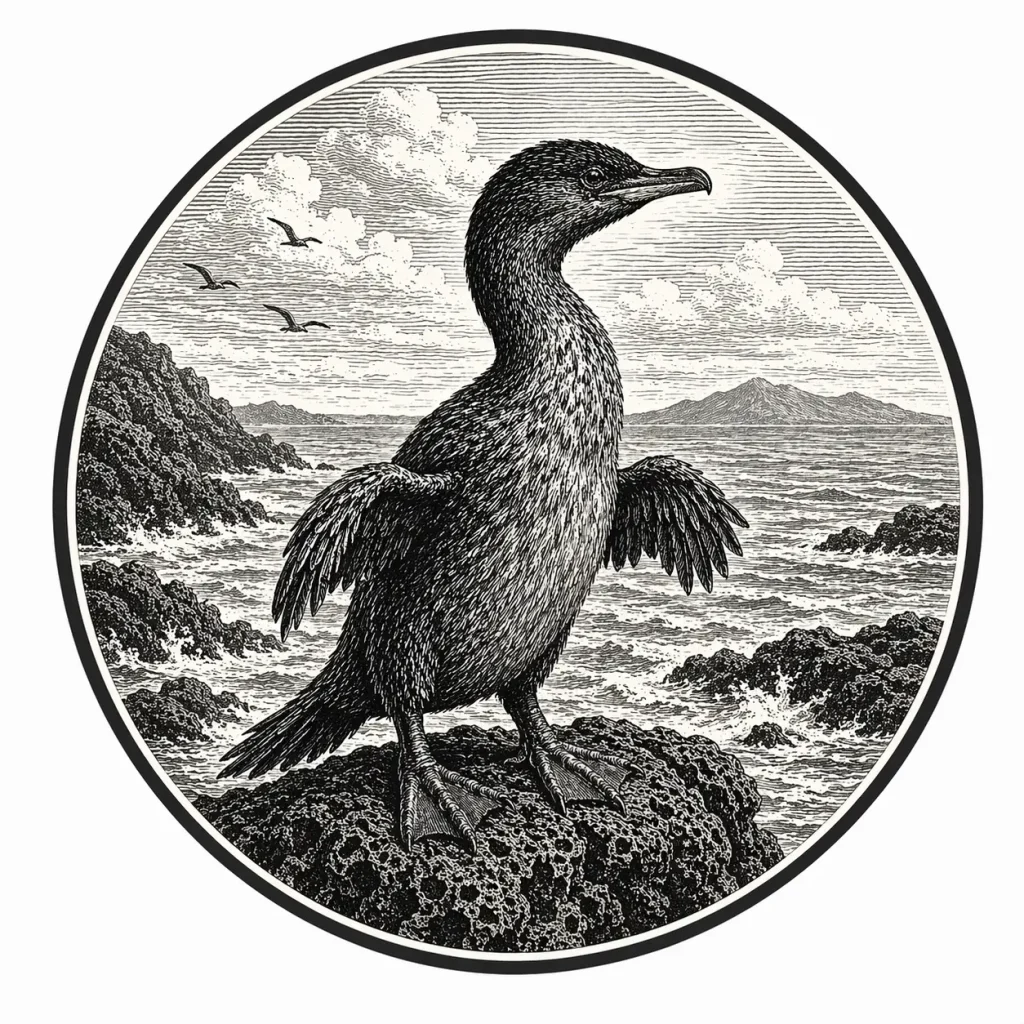
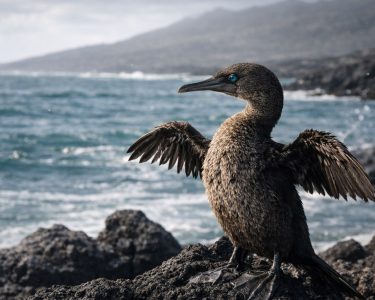
On the shores of Fernandina and western Isabela, a seabird followed a very different adaptive path.
The flightless cormorant abandoned the skies and became a powerful underwater hunter. Over time, its wings became dramatically smaller, transforming into compact paddles that propel the bird through the water in pursuit of fish and octopus.
Today, it remains one of the most specialized seabirds in the world.
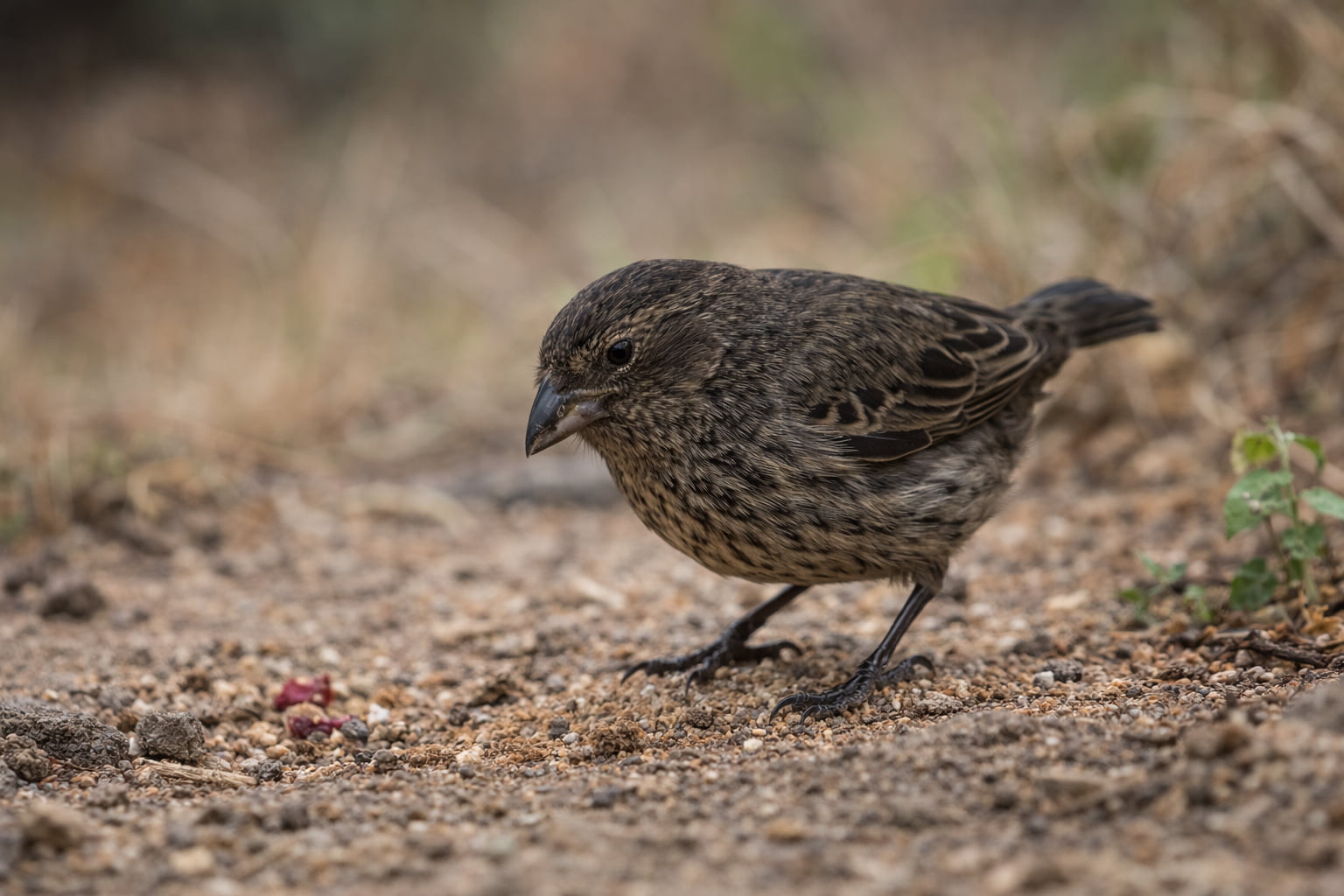
5. Galápagos Finches
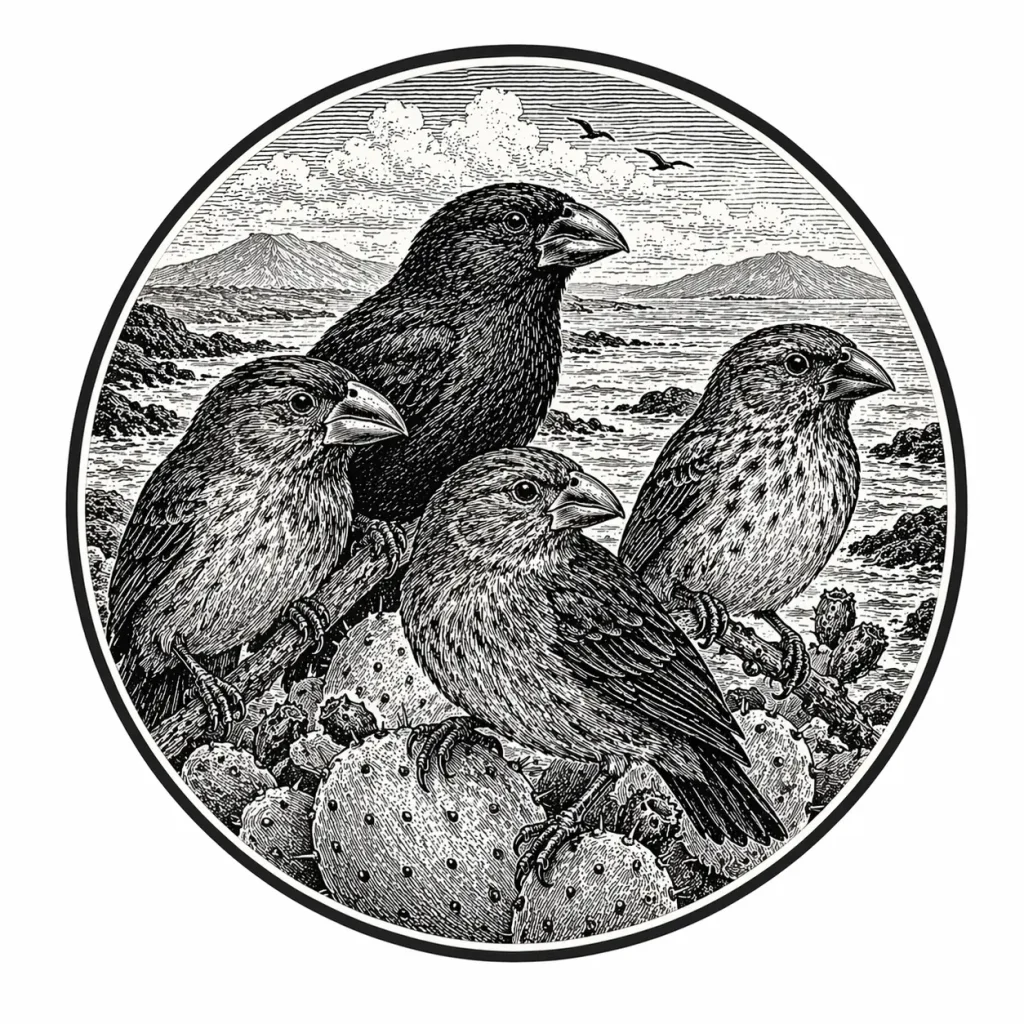
During his visit to the islands in 1835, naturalist Charles Darwin observed several species of small birds that would later become widely known as Darwin’s finches.
Each species displays a beak uniquely suited to its diet. Some are capable of cracking hard seeds, while others are adapted to extract insects from bark or cactus.
Together, they illustrate how natural adaptation can produce remarkable diversity within a single group of animals.
6. Waved Albatross
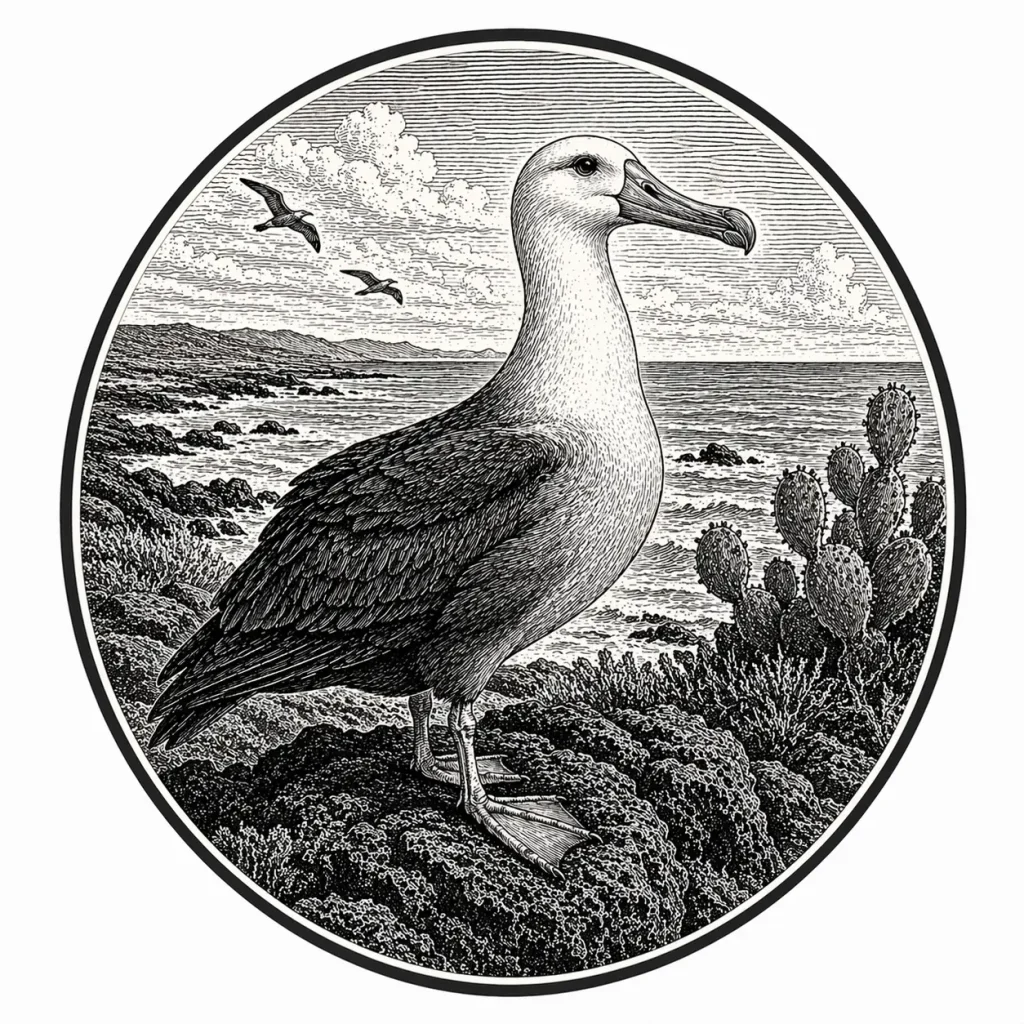
The waved albatross is one of the ocean’s great travelers.
With a wingspan of more than two meters, these birds spend most of their lives gliding above the Pacific. Yet nearly the entire global population returns each year to a single nesting site on Española Island.
There, pairs perform a rhythmic courtship display before raising a single chick.
7. Galápagos Fur Seal
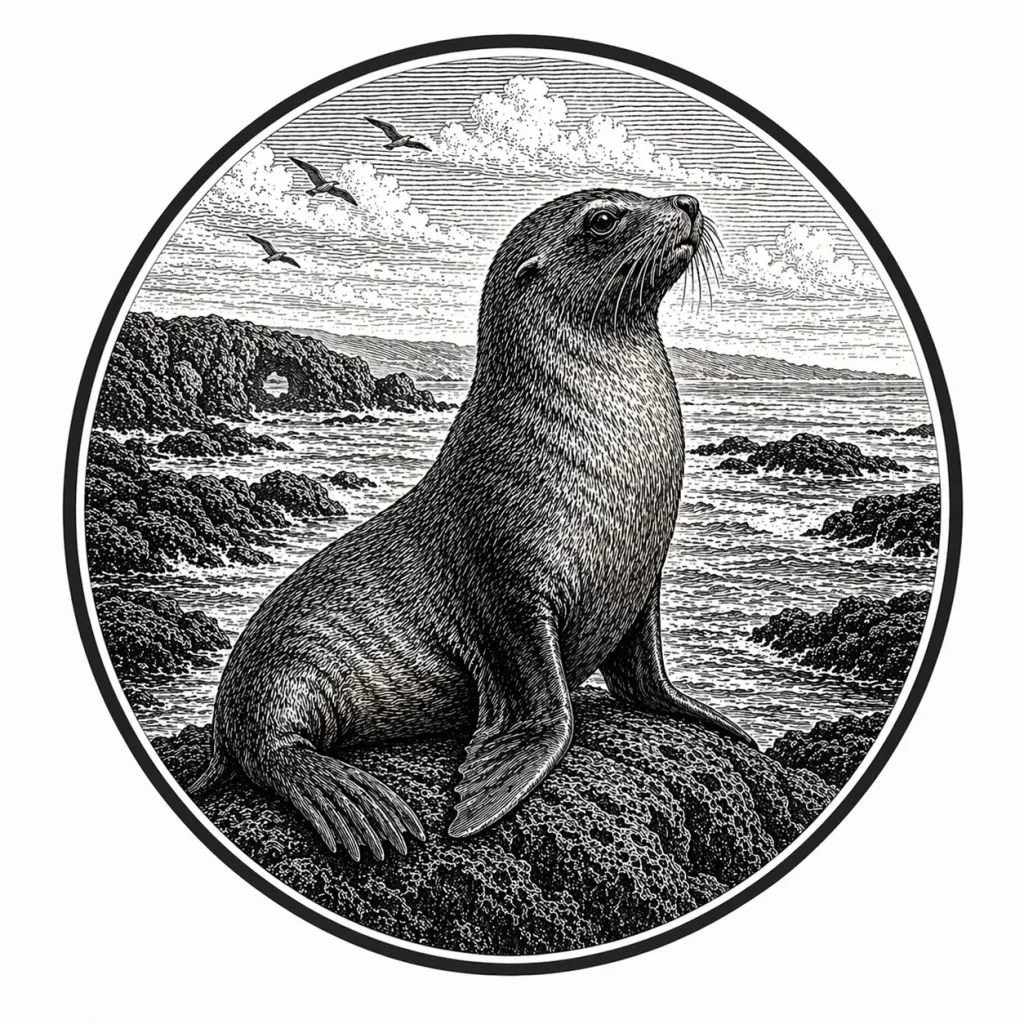
Often mistaken for sea lions, the Galápagos fur seal is a distinct and fully endemic species.
Smaller and more nocturnal than sea lions, they are typically found resting on shaded rocky shores, where they avoid the daytime heat. Their dense fur allows them to thrive in cooler waters, particularly in the western part of the archipelago.
They are agile swimmers and skilled hunters, feeding primarily on fish and squid under the cover of darkness.
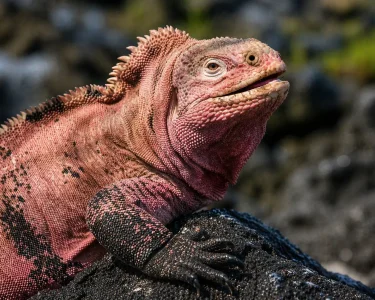
8. Pink Land Iguana
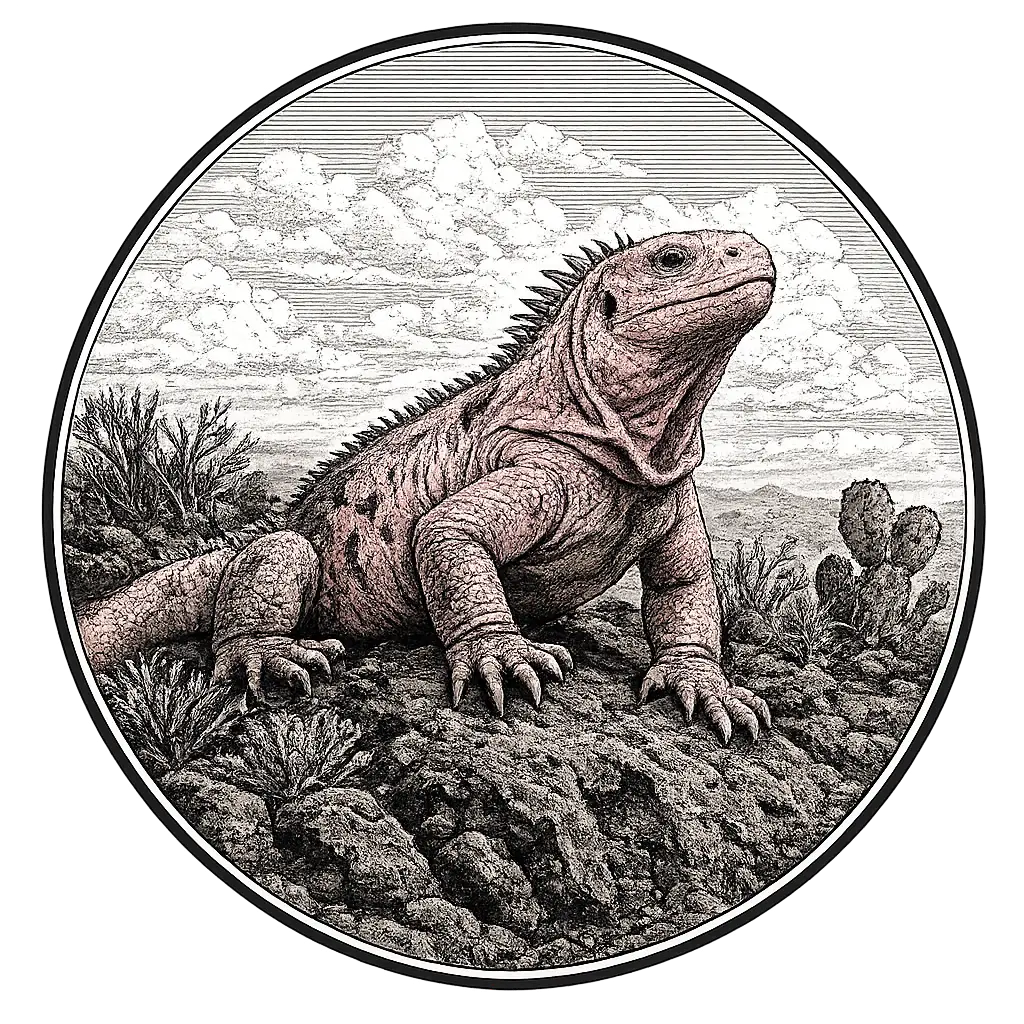
Unknown to science until relatively recently, this striking species is distinguished by its pale pink coloration crossed with dark bands. Fewer than a few hundred individuals are believed to remain in the wild.
High on the remote slopes of Wolf Volcano on northern Isabela Island lives one of the rarest reptiles on Earth—the pink land iguana.
Because its habitat lies within a remote and strictly protected area, it remains one of the least-seen animals in the Galápagos—an extraordinary reminder of how much there is still to understand and protect.
Where to See These Iconic Galápagos Animals
Wildlife is present across the archipelago, but certain locations offer more consistent and well-documented opportunities to observe these species in their natural habitats.
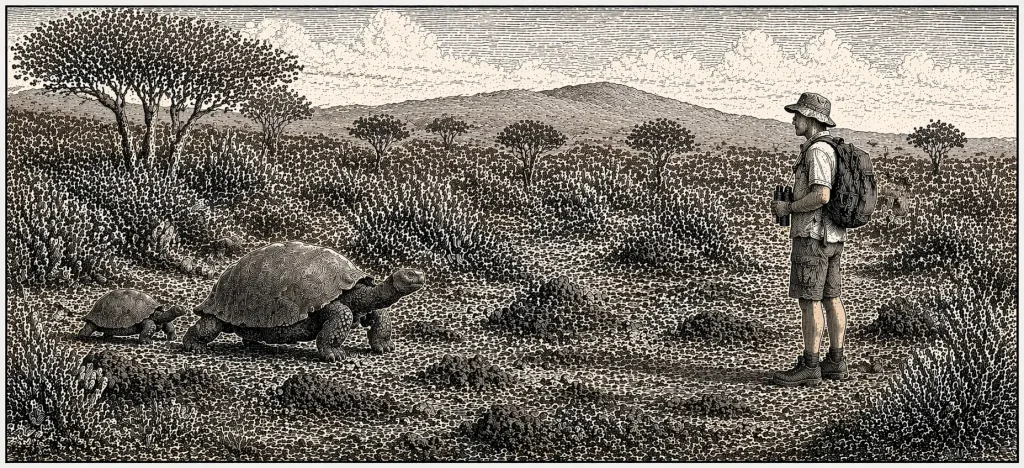
Galápagos Giant Tortoises: These emblematic reptiles are most commonly encountered in the humid highlands, where they gather near freshwater sources and grazing areas. The highlands of Santa Cruz (including El Chato and Rancho Primicias) offer some of the most accessible opportunities to observe tortoises in the wild.
On Isabela Island, tortoises are widely distributed, but most large populations inhabit remote and protected areas that are not open to tourism. However, visitors can observe them at the Arnaldo Tupiza Breeding Center near Puerto Villamil, as well as occasionally along authorized trails in the highlands.
Marine Iguanas: Found along nearly every shoreline, the largest colonies occur in the western islands, especially Fernandina (Punta Espinoza) and the coasts of Isabela. On Santa Cruz, they are easily observed at Tortuga Bay, where nutrient-rich waters support abundant algae.
Galápagos Penguins: Their distribution is closely tied to the cold Cromwell Current. The majority of the population is concentrated around Isabela and Fernandina. Key observation areas include Elizabeth Bay, Tagus Cove, and the nearby Mariela islets, where penguins are often seen foraging in shallow waters.
Flightless Cormorants: Among the most geographically restricted seabirds in the world, they occur only along the rocky coastlines of Fernandina and western Isabela, typically in areas influenced by strong marine productivity.
Galápagos Finches: These birds are widespread across the islands, from arid lowlands to humid highlands. Their diversity becomes particularly evident on islands such as Santa Cruz, San Cristóbal, and Isabela, where multiple species occupy distinct ecological niches.
Waved Albatross: Between April and December, nearly the entire global population nests on Española Island. Sites such as Punta Suárez offer a rare opportunity to observe their elaborate courtship displays and take-offs along coastal cliffs.
Galápagos Fur Seals: Unlike sea lions, fur seals favor shaded rocky areas and cooler environments. They are most abundant in the western islands, particularly around Fernandina and locations such as Punta Vicente Roca on Isabela.
Pink Land Iguana: This remains the most elusive species in the archipelago. Restricted to the slopes of Wolf Volcano on northern Isabela, it inhabits a strictly protected area accessible only to authorized scientific expeditions.
Why Galápagos Endemic Species Are Unique
The extraordinary wildlife of the Galápagos is shaped by a rare combination of environmental conditions. The islands were formed by volcanic activity and were never connected to the mainland, meaning every species arrived by crossing the ocean.
At the same time, the convergence of major ocean currents—including the Humboldt, Cromwell, and Panama currents—creates one of the most productive marine environments in the tropical Pacific.
Together with geographic isolation, these conditions allow species to develop distinct natural adaptations to local environments.
The Future Is in Our Hands
Protecting the Galápagos is not simply about preserving a remote group of islands.
It is about safeguarding one of the most extraordinary concentrations of biodiversity on the planet.
The species found only in the Galápagos represent an irreplaceable natural heritage—and their future depends on the choices we make today.