

Photo: ©Iván López
Marine iguanas do not look like animals built for the sea.
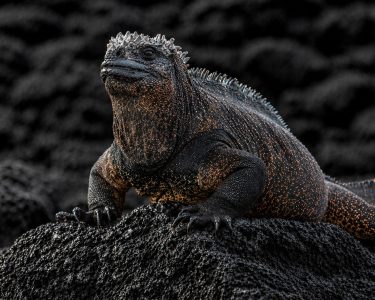
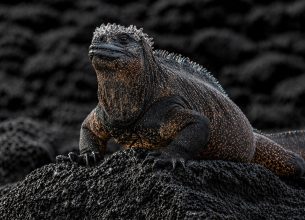
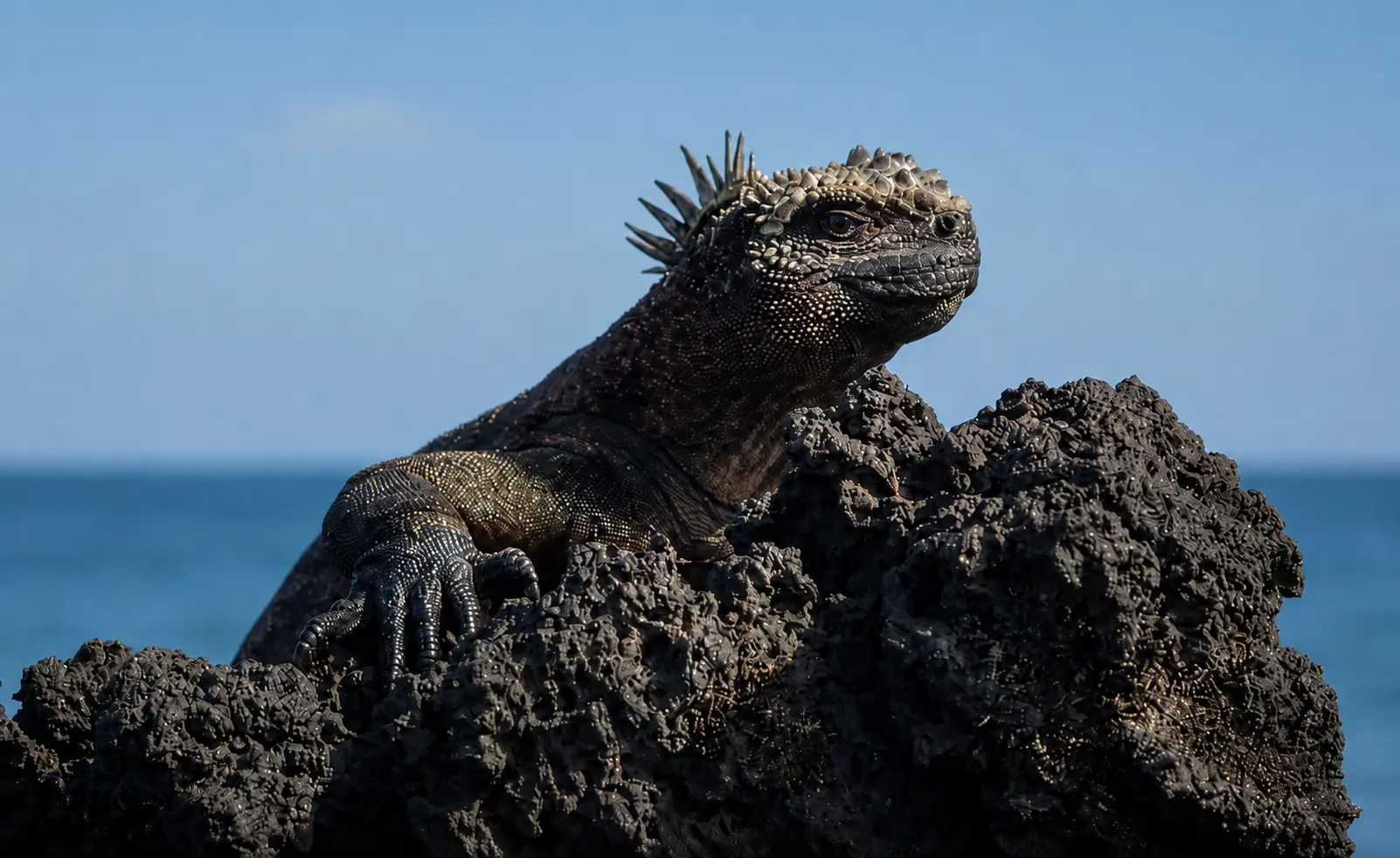
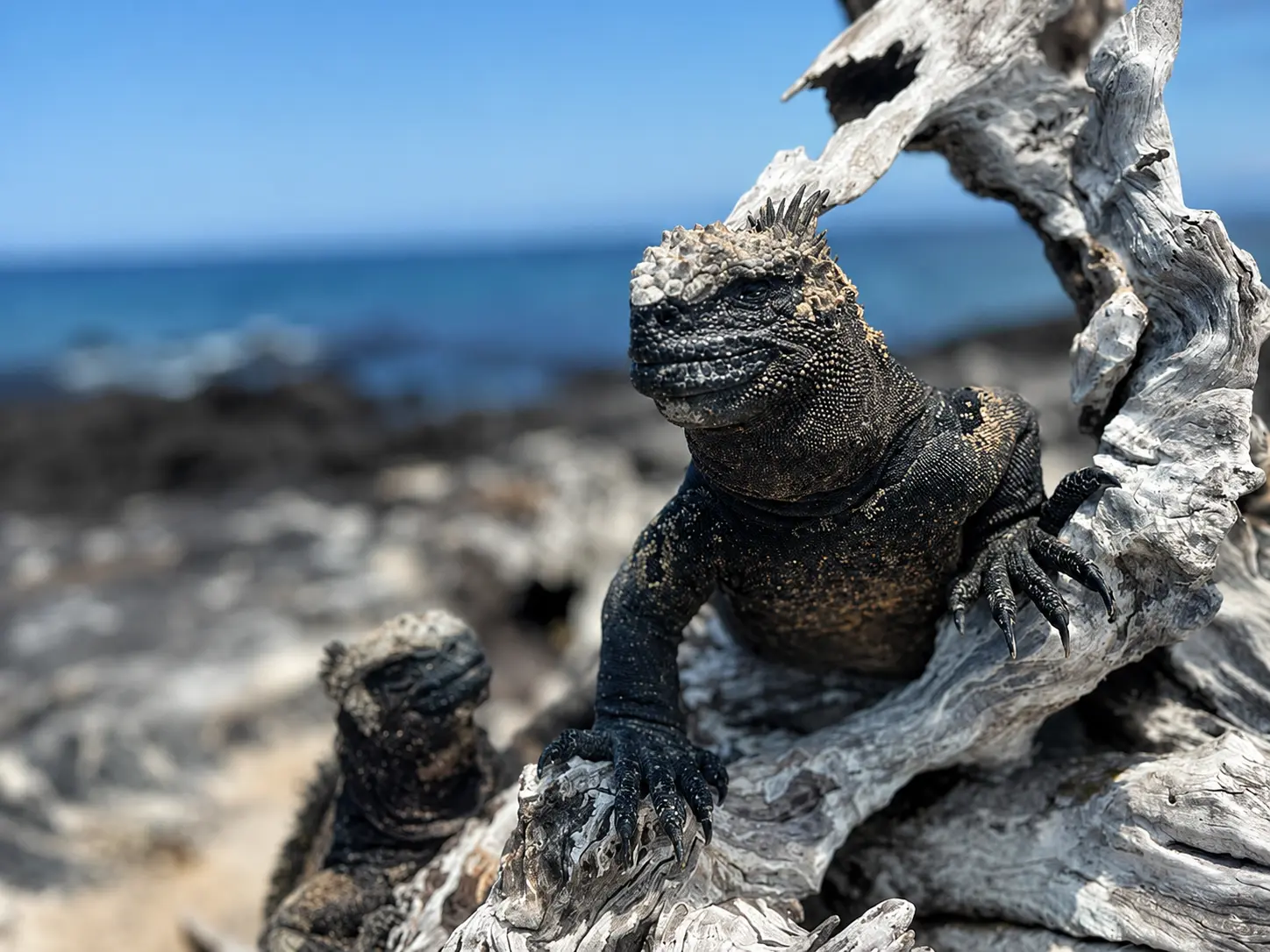
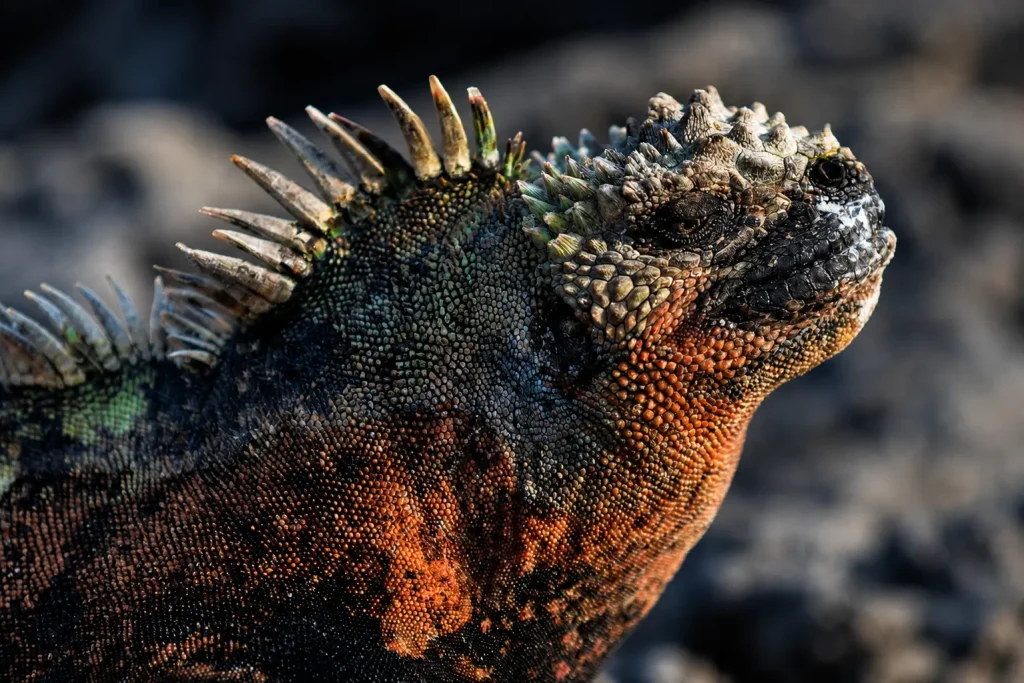
At first glance, they seem made for the lava: dark, heavy-bodied reptiles stretched across black rock, soaking up the equatorial sun. They appear slow, almost ancient, as if the shoreline itself had taken animal form.
Then one slips into the surf.
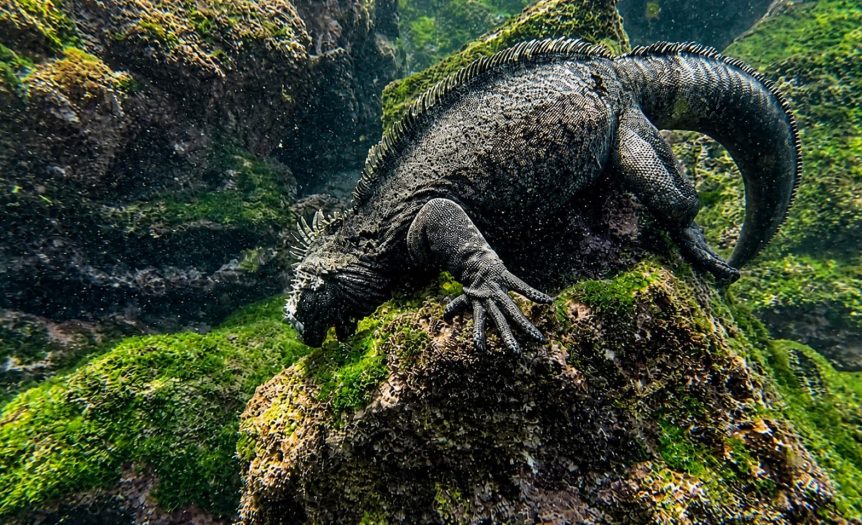
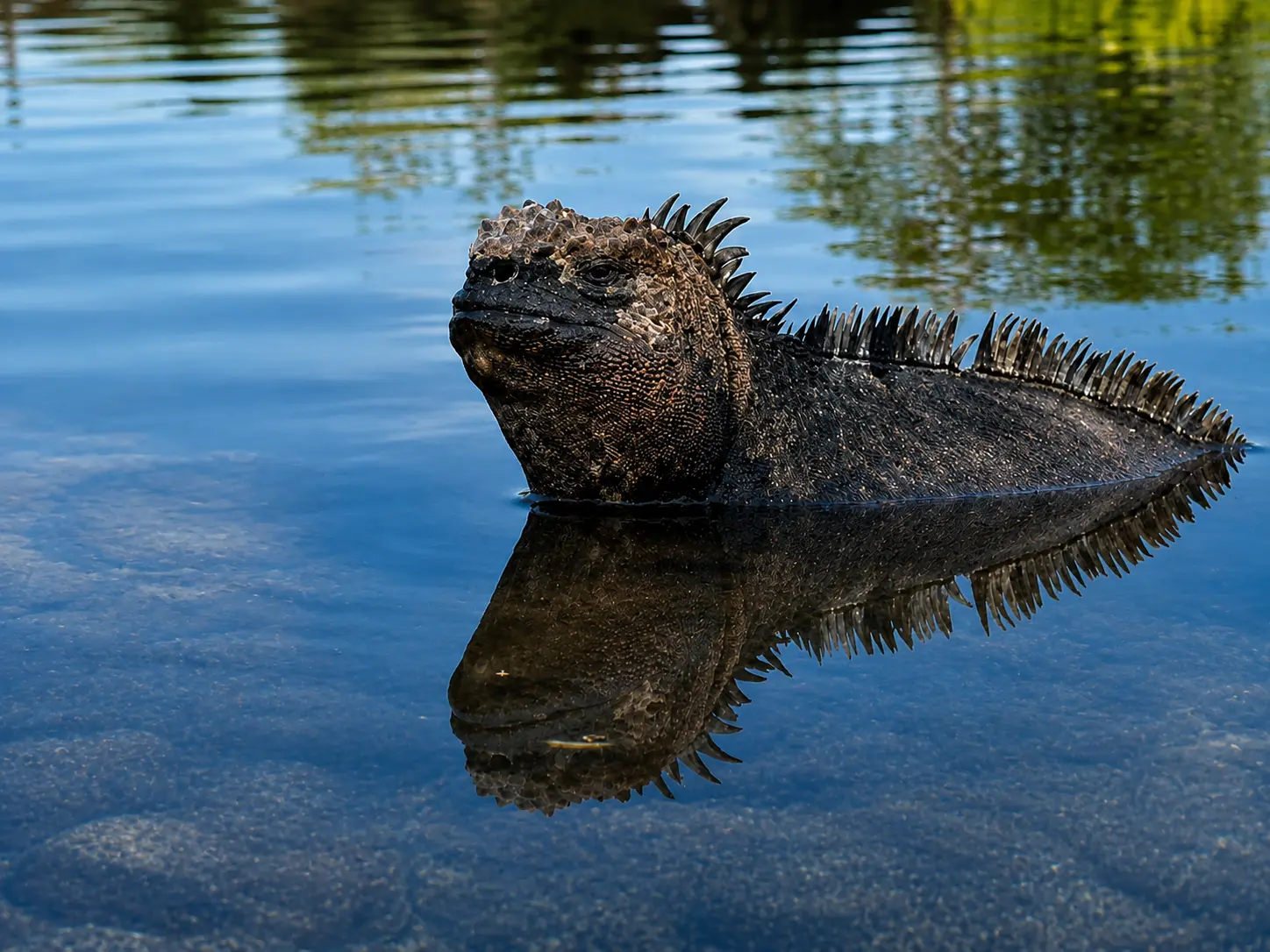
Within moments, the same creature that looked motionless on land is moving through the water, using its flattened tail to swim and its claws to hold fast against the surge. Below the surface, it begins to graze on algae growing over submerged rock.
That is what makes the Galápagos marine iguana so extraordinary. It is the only lizard in the world known to live and forage at sea — and it survives there through a precise set of body features and behaviors that help it manage cold water, strong currents, salt, and a demanding marine diet.
A reptile that eats the sea
The marine iguana’s ocean life begins with food.
Unlike land iguanas, which feed on vegetation ashore, marine iguanas feed mainly on marine algae. Much of that algae grows on rocks along the coast, exposed at low tide or submerged beneath the waves. Smaller iguanas usually feed closer to shore, grazing in intertidal areas when the sea pulls back. Larger animals, especially big males, can go farther out and feed in deeper water, gripping rocks in the current while they scrape algae from the surface.
This is not an easy way to make a living. The Galápagos shoreline is rough, cold, and often battered by waves. But the marine iguana carries the tools for it.
Its blunt snout helps it crop algae from rock. Its sharp claws help it cling in the surge. Its flattened tail acts like a paddle, pushing the animal through the water while its legs trail beside the body. What may look awkward on land becomes more purposeful in the sea.
Seen underwater, the animal begins to make sense: this is a reptile built for lava, tide, and algae.
The problem with cold water
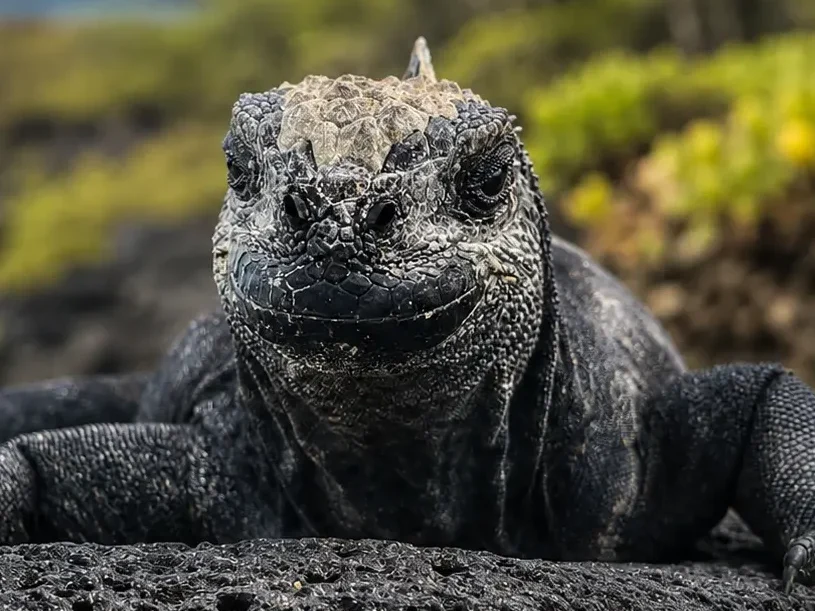
For all their skill in the ocean, marine iguanas still face one basic limitation: they are reptiles.
They do not generate body heat the way birds or mammals do. Before entering the water, they must warm themselves on land, often lying on dark lava until their body temperature is high enough to swim and feed. Once they enter the sea, they lose heat quickly. That cold limits how long they can remain underwater before they need to return to shore and warm up again.
This rhythm — heat, feed, return, reheat — is central to their survival.
Their black coloration helps them absorb sunlight. Their behavior helps them manage the narrow window when feeding is worth the energy cost. One study described the pattern in simple terms: marine iguanas essentially “forage while warm” and return to warm up when feeding becomes less efficient.
The body also helps conserve energy. When marine iguanas enter the water, their heartbeat can slow, helping them remain submerged longer while feeding.
Every dive, then, is a calculation. The iguana must gain more from feeding than it loses to cold.
Why they sneeze salt
©Galápagos Herald
The ocean gives marine iguanas food. It also gives them salt.
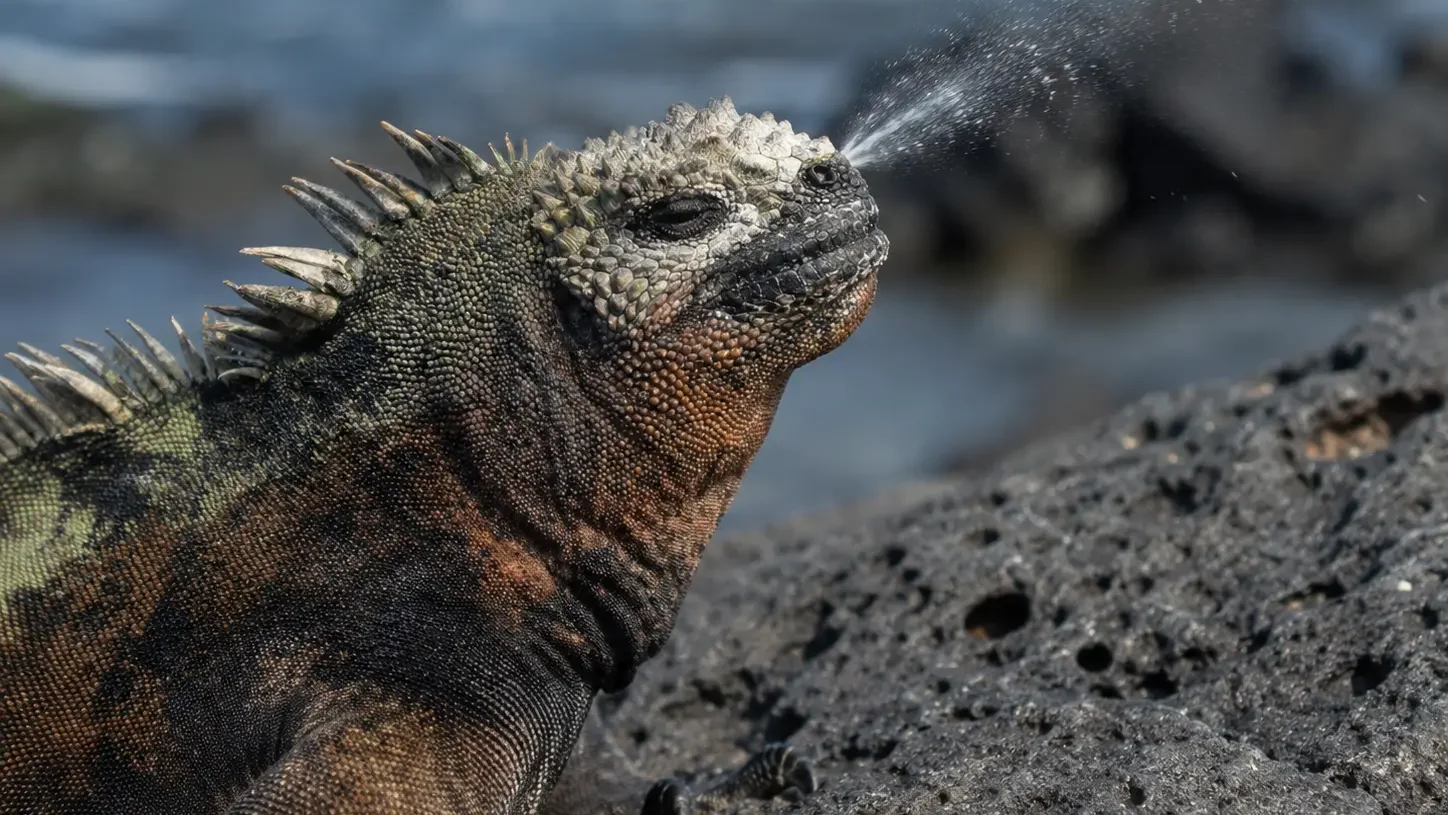
As they graze on marine algae, they take in salt from seawater and from their food. For most land reptiles, that would be a serious problem. Marine iguanas solve it with specialized glands connected to the nose. These glands remove excess salt from the body, which the iguanas then expel through the nostrils in forceful, sneeze-like bursts.
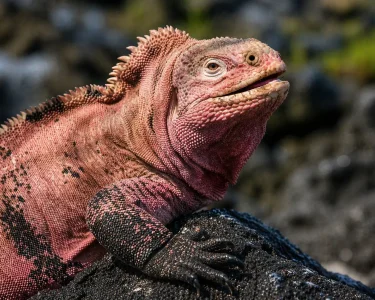
That is why many marine iguanas appear dusted in white around the snout and face. The crust is not dirt. It is salt.
To a visitor, the sound may seem almost comic: a reptile sneezing on a rock. But the function is essential. Without a way to remove excess salt, a lizard that feeds in the sea could not keep returning to that food source.
In Galápagos, even a sneeze can be a survival mechanism.
Not all marine iguanas feed the same way
Marine iguanas may gather in large groups and look similar from a distance, but their feeding strategies vary.
Size matters. Smaller iguanas tend to feed in shallower, warmer areas exposed at low tide, where the physical demands are lower. Larger individuals can reach lower intertidal areas, and in some places, the biggest males may dive to reach underwater algae beds. Their choices depend on body size, tide level, wave action, temperature, and the energy required to feed.
This makes the shoreline more than a backdrop. For a marine iguana, it is a shifting map of risk and opportunity.
A calm tide may open access to algae. Cold water may shorten feeding time. Strong waves may make grazing more costly. The animal’s survival depends on matching its body to the conditions of the coast.
The marine iguana is not simply a lizard that swims. It is a shoreline specialist.
A hard life tied to the ocean
For marine iguanas, the sea is both lifeline and threat.
Because they depend so heavily on marine algae, changes in ocean conditions can affect them quickly. During warm El Niño periods, the algae they rely on can decline, leaving iguanas with less food. During severe food shortages, marine iguanas have even been observed shrinking in body length — an extraordinary response linked to survival when resources are scarce.
That fact changes how we see them.
Marine iguanas are often treated as permanent fixtures of the lava shore, as if they are as tough and unchanging as the rocks beneath them. But their lives are closely tied to the temperature, productivity, and rhythm of the surrounding sea.
When the ocean changes, the iguanas feel it.
A Galápagos original
In Galápagos, it is easy to walk past marine iguanas without fully seeing them.
They lie piled on lava, dark bodies blending into dark rock. They bask beside trails, sneeze salt into the air, and slip into the waves with little drama.
But few animals reveal the islands’ natural character more clearly.
A reptile that feeds on algae underwater. A lizard that must warm itself on lava before entering the sea. A body that slows its heartbeat in cold water, grips rock against the surge, and expels salt through its nostrils. Each detail tells part of the same story: survival here depends on meeting a harsh environment with precise physical and behavioral solutions.
That is why the marine iguana is more than a curiosity.
It is one of the clearest expressions of Galápagos itself — where lava, sun, cold currents, and living bodies meet at the edge of the sea.