

From a distance, the shoreline looks untouched.
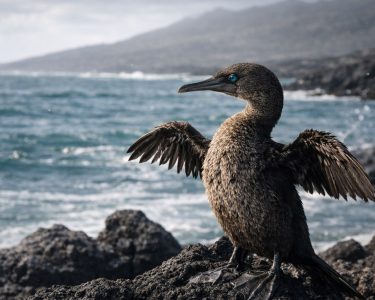
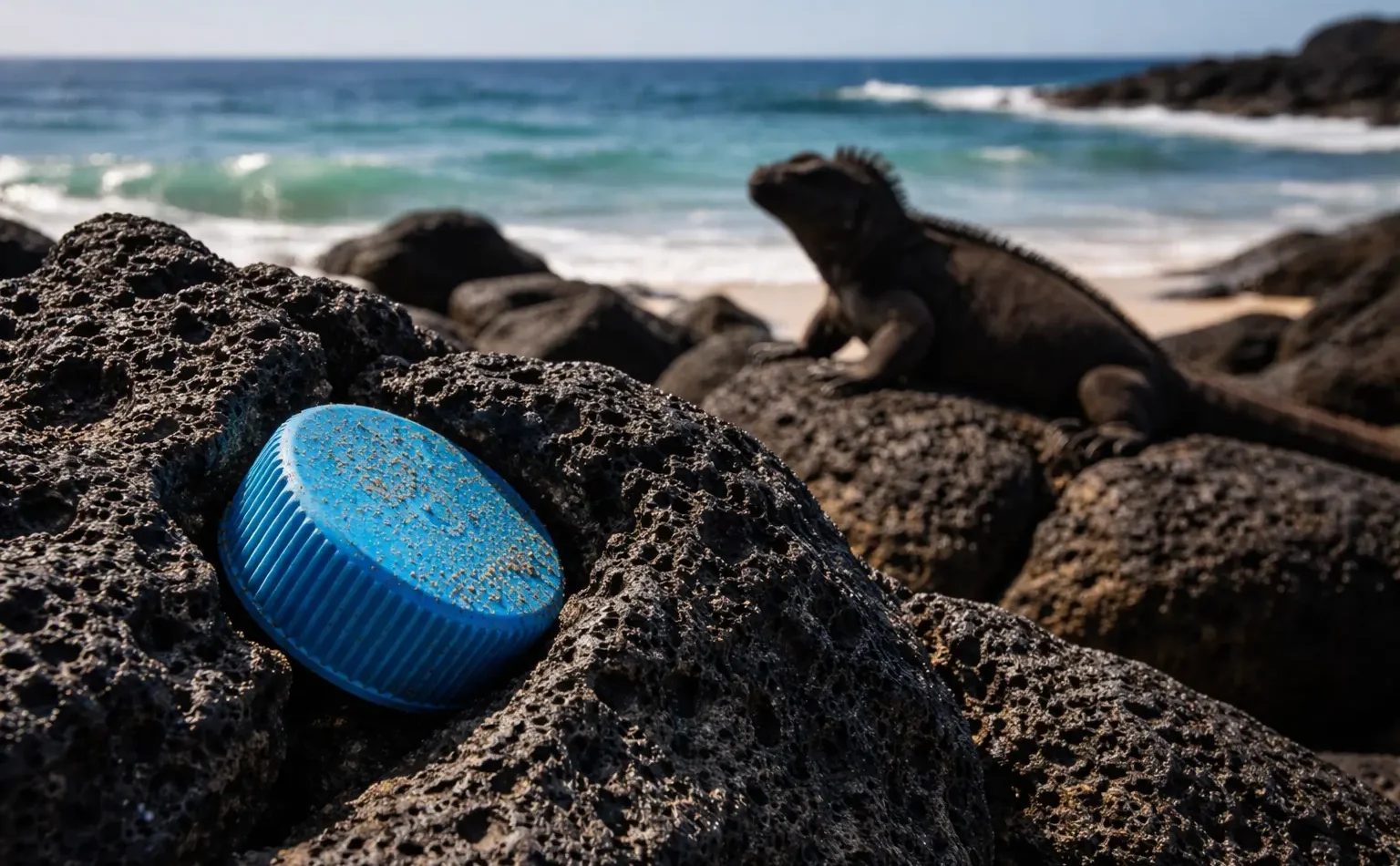
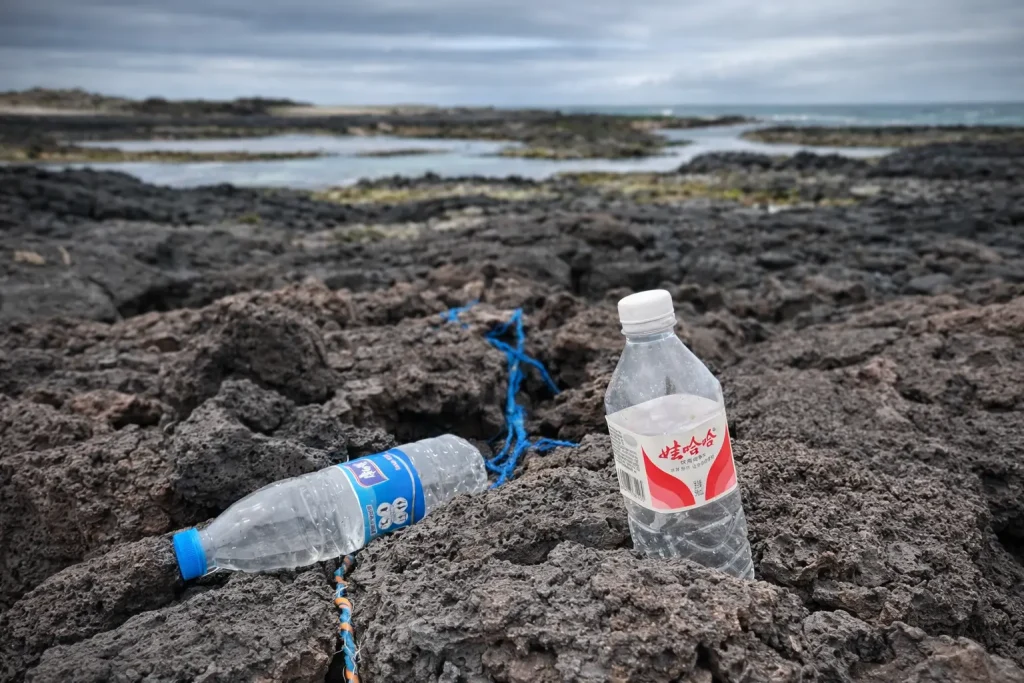
Black volcanic rocks stretch toward the ocean. Waves break in steady rhythm. A marine iguana rests on the warm stone, unmoved by the passing tide. But as the water pulls back, small fragments begin to appear—caught between rocks, tangled in dry algae, scattered across the sand. A bottle cap. A length of nylon line. A piece of plastic worn smooth by salt and time.
Nothing here was made on these islands.
A Current That Connects Everything
Galápagos is often described as isolated. In reality, it is deeply connected.
Ocean currents move constantly through the archipelago, carrying nutrients that sustain an extraordinary web of life. The Humboldt Current rises from the south, cold and rich. The Cromwell Current pushes from the west, bringing deep-water nutrients to the surface. Together, they help shape one of the most productive marine systems in the Pacific.
They also carry something else.
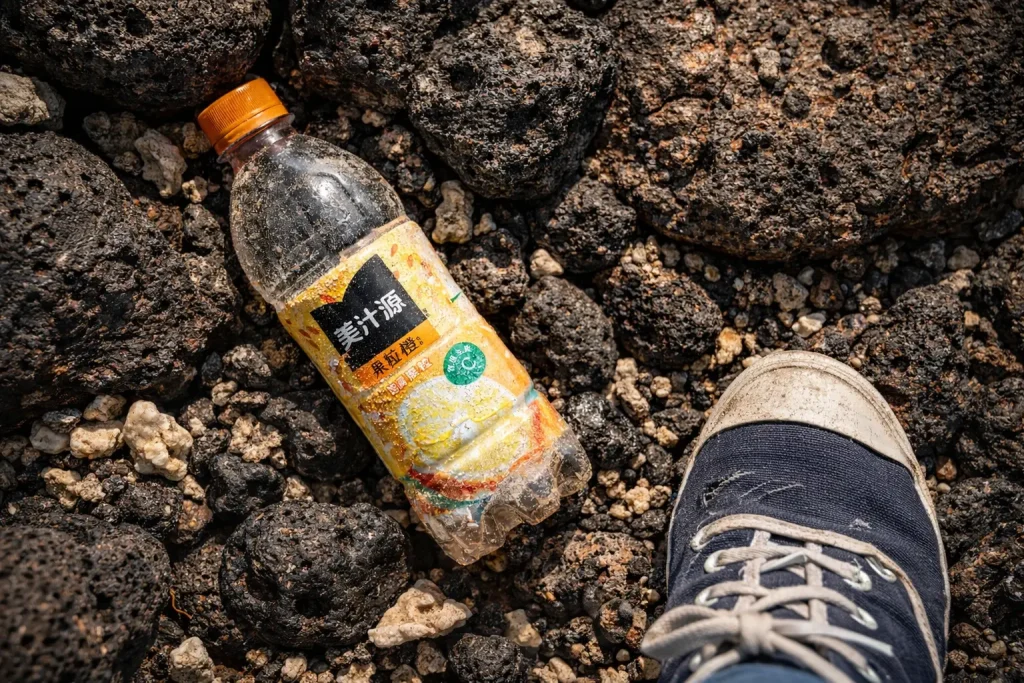
Floating plastic—lost, discarded, or abandoned—can travel thousands of kilometers across the ocean. According to the IUCN, at least 14 million tons of plastic end up in the ocean every year, much of it carried far from where it was first discarded. What begins as waste along distant coastlines or at sea can eventually arrive here, drawn into the same currents that sustain life.
By the time it reaches Galápagos, it has already been in motion for years.
When Plastic Disappears, It Does Not Go Away
Plastic rarely remains intact.
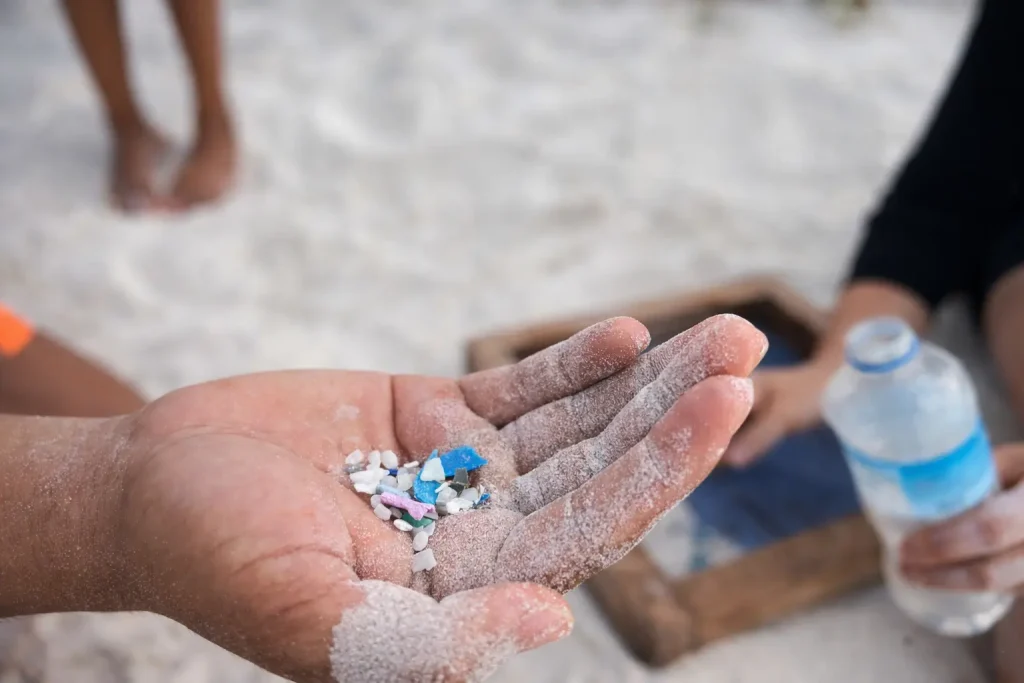
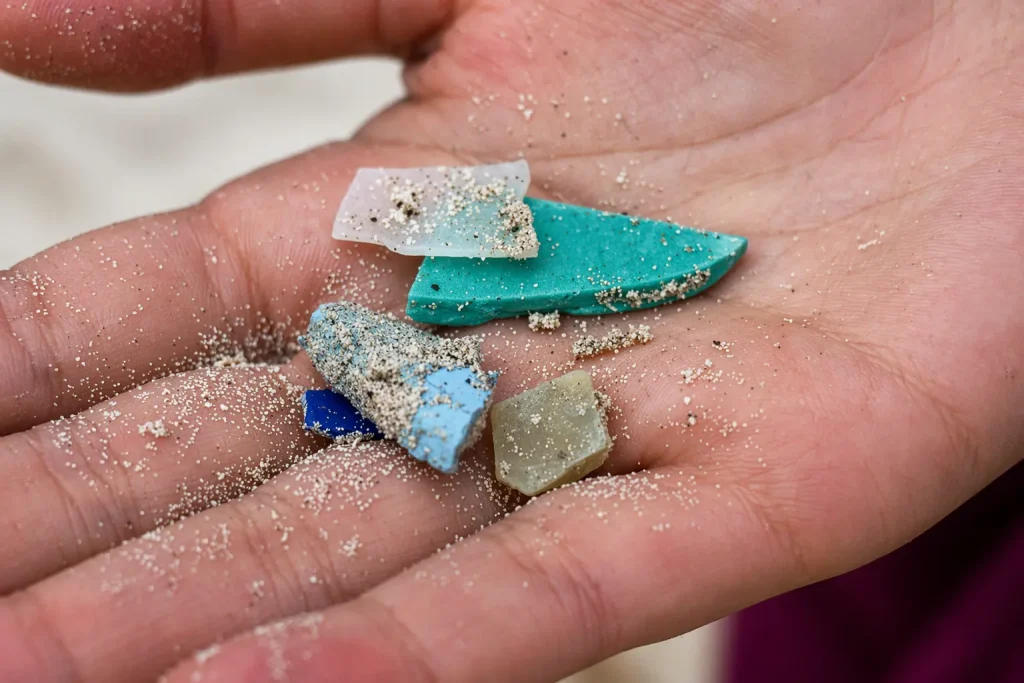
As UNEP explains, discarded plastic does not simply disappear. Over time, sunlight and wave action break it into smaller and smaller pieces, eventually becoming microplastics that persist in water, sediments, and food webs.
In Galápagos, this process is already underway.
Microplastics have been documented in coastal sediments and in the digestive systems of marine species. The full extent of their impact is still being studied, but their presence alone signals a shift: pollution that is no longer visible, but still active within the ecosystem.
The Coastline as Evidence
On inhabited islands such as Santa Cruz and San Cristóbal, plastic pollution reflects both local and global realities.
Some waste originates within the islands—linked to daily consumption, packaging, and the limits of waste management in a remote setting. But a significant portion arrives from outside, carried by ocean currents and deposited along exposed coastlines.
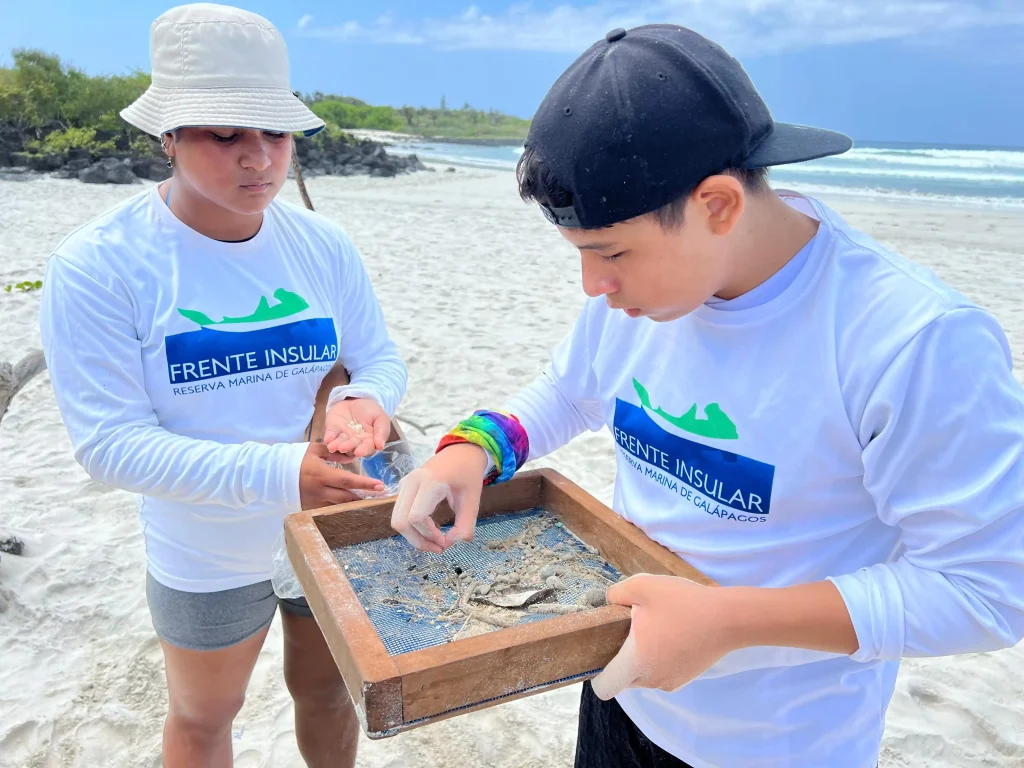
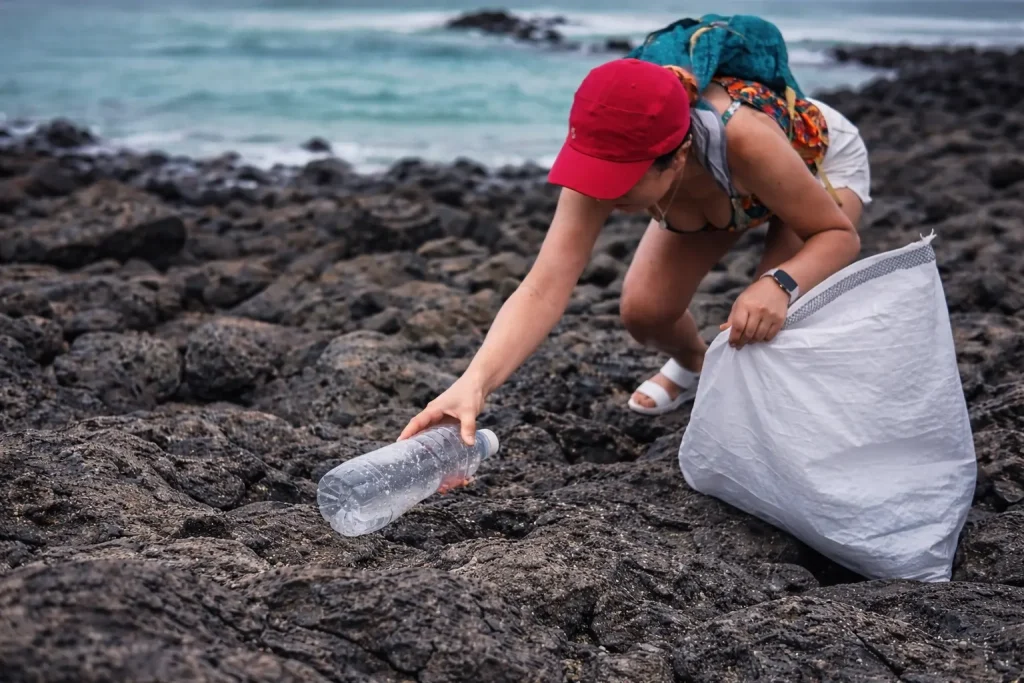
Beach cleanups make this visible.
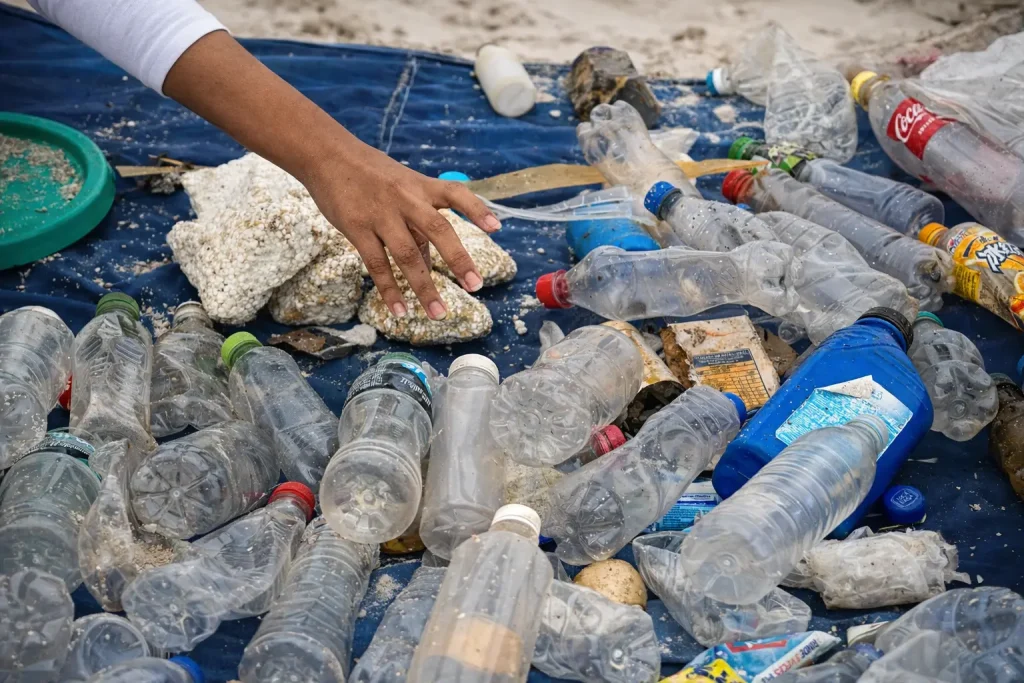
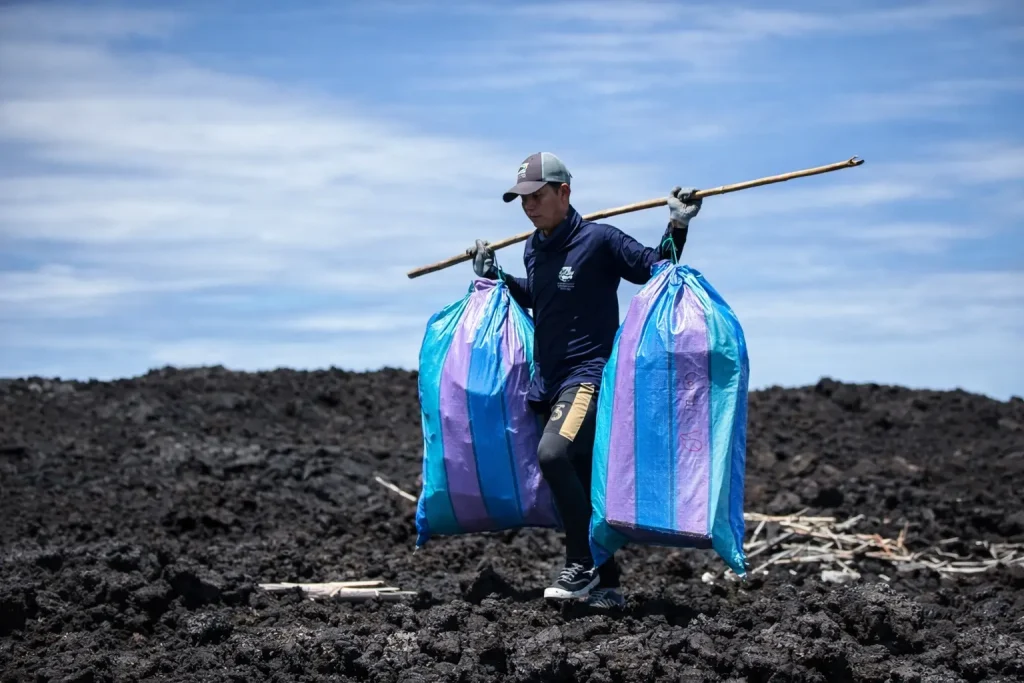
In a single morning, teams of volunteers, park staff, and local organizations can collect hundreds of kilograms of debris from one stretch of shore. Fishing lines, fragments of nets, plastic containers, and packaging materials are among the most common findings.
Each item has traveled its own path.
Some were used nearby. Others crossed entire ocean basins before arriving here.
In Galápagos, the problem is no longer theoretical. In 2023, the Charles Darwin Foundation reported that giant tortoises on Santa Cruz were ingesting plastic waste in and near human-modified areas.
When Plastic Becomes a Risk
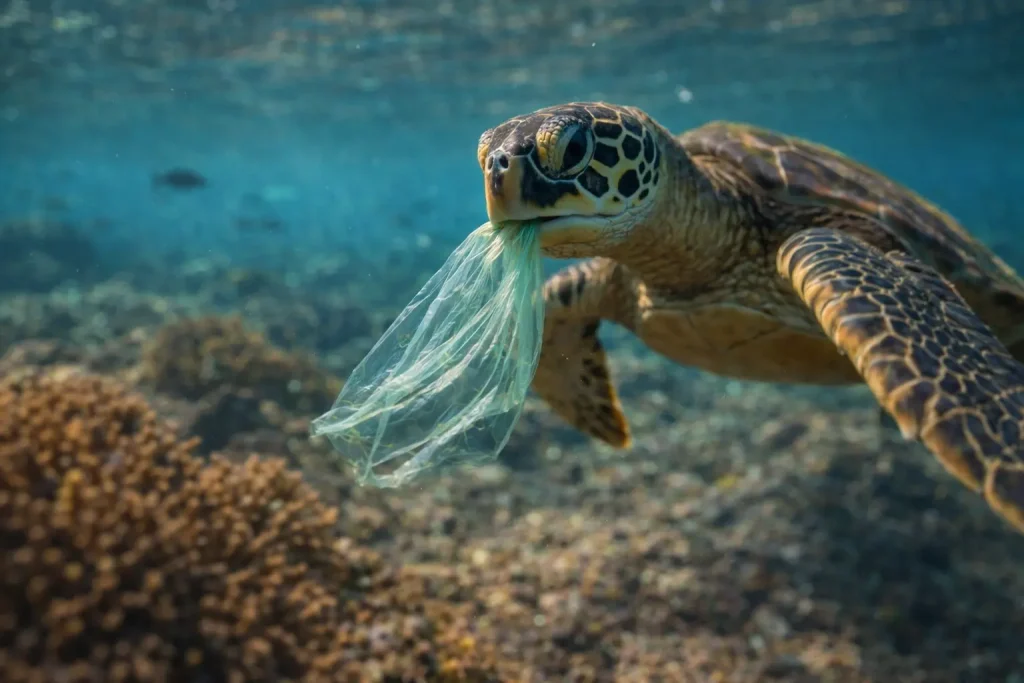
The impact on wildlife is rarely immediate, but it is real.
The IUCN identifies ingestion, suffocation, and entanglement as among the clearest ways plastic harms wildlife, including sea turtles, seabirds, fish, and marine mammals. Even when ingestion does not cause immediate death, it can affect feeding, growth, and survival over time.
In a system shaped by isolation and finely balanced interactions, even small, repeated pressures can alter how species respond to their environment.
Local Action, Daily Work
In Galápagos, responses to plastic pollution are often direct and practical.
Local initiatives have reduced the use of certain single-use plastics, including bags and straws. Regulations limit what can enter the islands, and waste management systems continue to evolve, though they face logistical challenges.
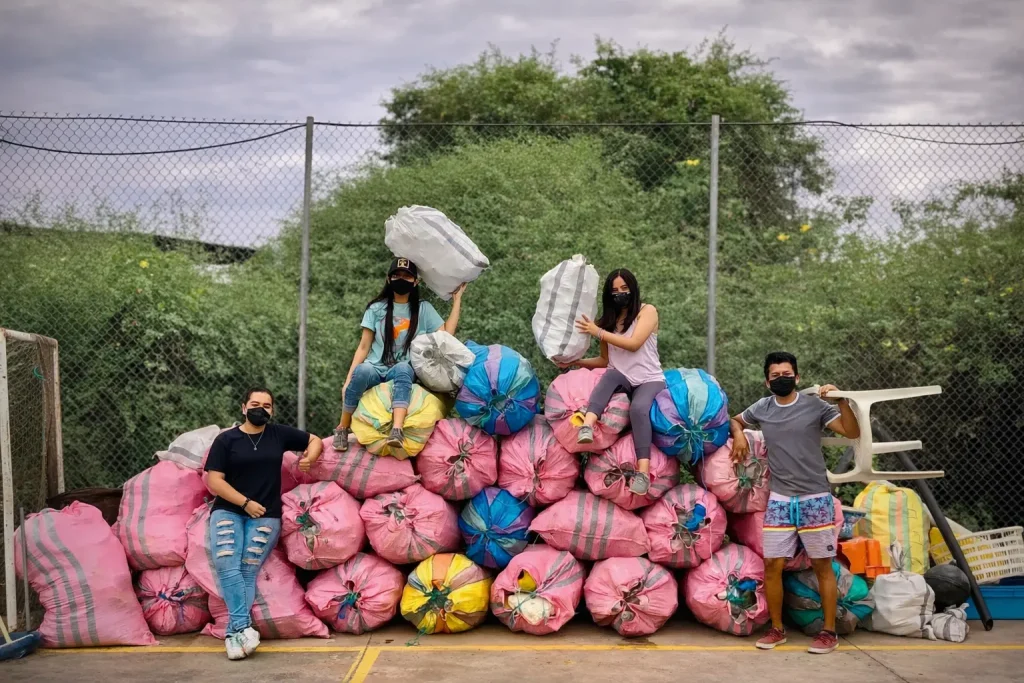
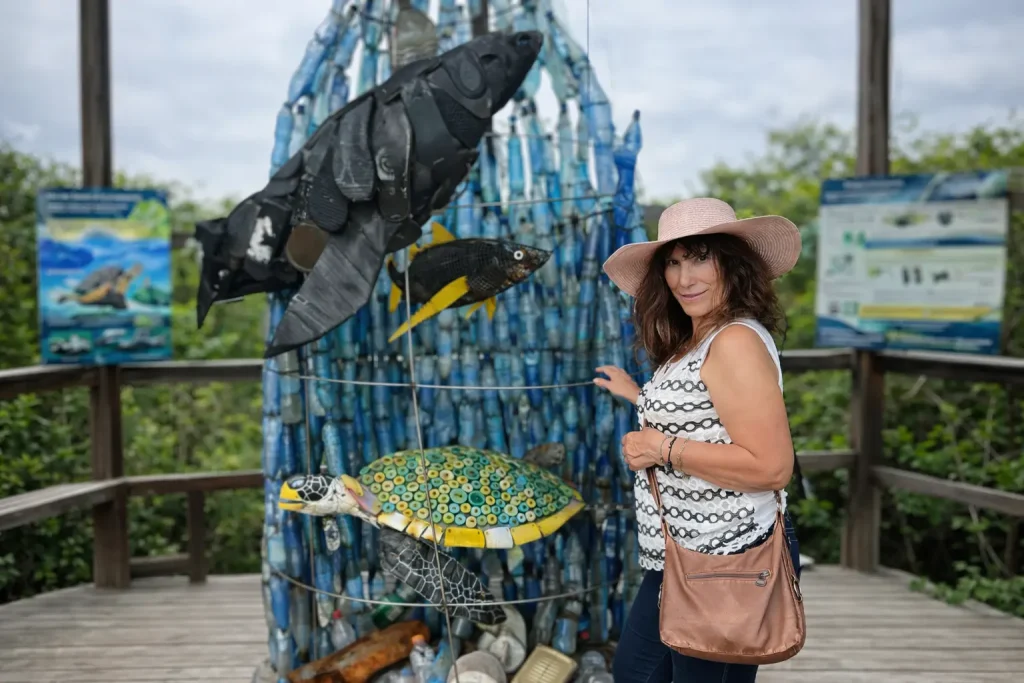
But much of the work happens on the ground.
Beach cleanups remain one of the most consistent actions. Schools, community groups, and conservation teams participate regularly, removing debris while building awareness. For many residents, the issue is no longer abstract—it is something they encounter, handle, and manage themselves.
The effort is continuous.
Because the arrival of plastic does not stop.
A Question Without a Simple Answer
The idea of a plastic-free Galápagos is compelling. It is also complex.
The islands benefit from geographic isolation and strong regulations. These factors create real opportunities to reduce local sources of pollution. But they do not control what arrives from the open ocean.
Galápagos is connected to global systems of production, consumption, and waste.
What reaches these shores reflects decisions made far beyond them.
Beyond the Horizon
Plastic on these islands is not only a local problem. It is a signal.
It shows how even the most protected ecosystems remain exposed to global pressures. It reveals the limits of conservation when external forces continue to operate at scale.
And it leaves a question that extends well beyond Galápagos:
What does it mean to protect a place that is connected to everything else?
Here, the answer is not theoretical.
It is visible—between the rocks, along the tide line, and in the quiet work of those who return, day after day, to remove what does not belong.