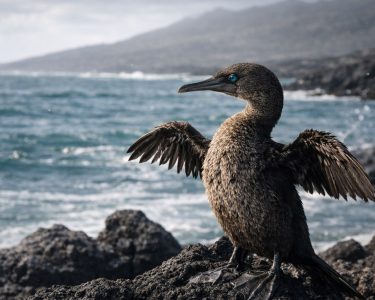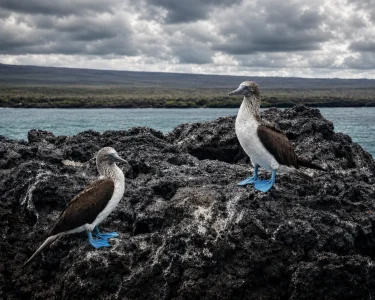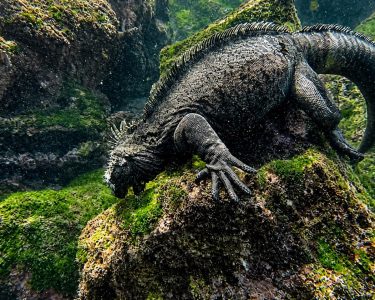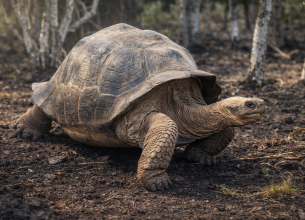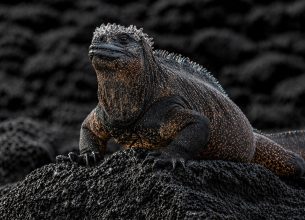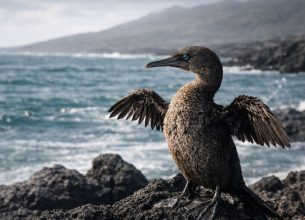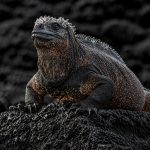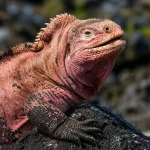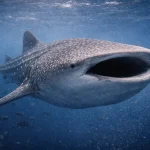


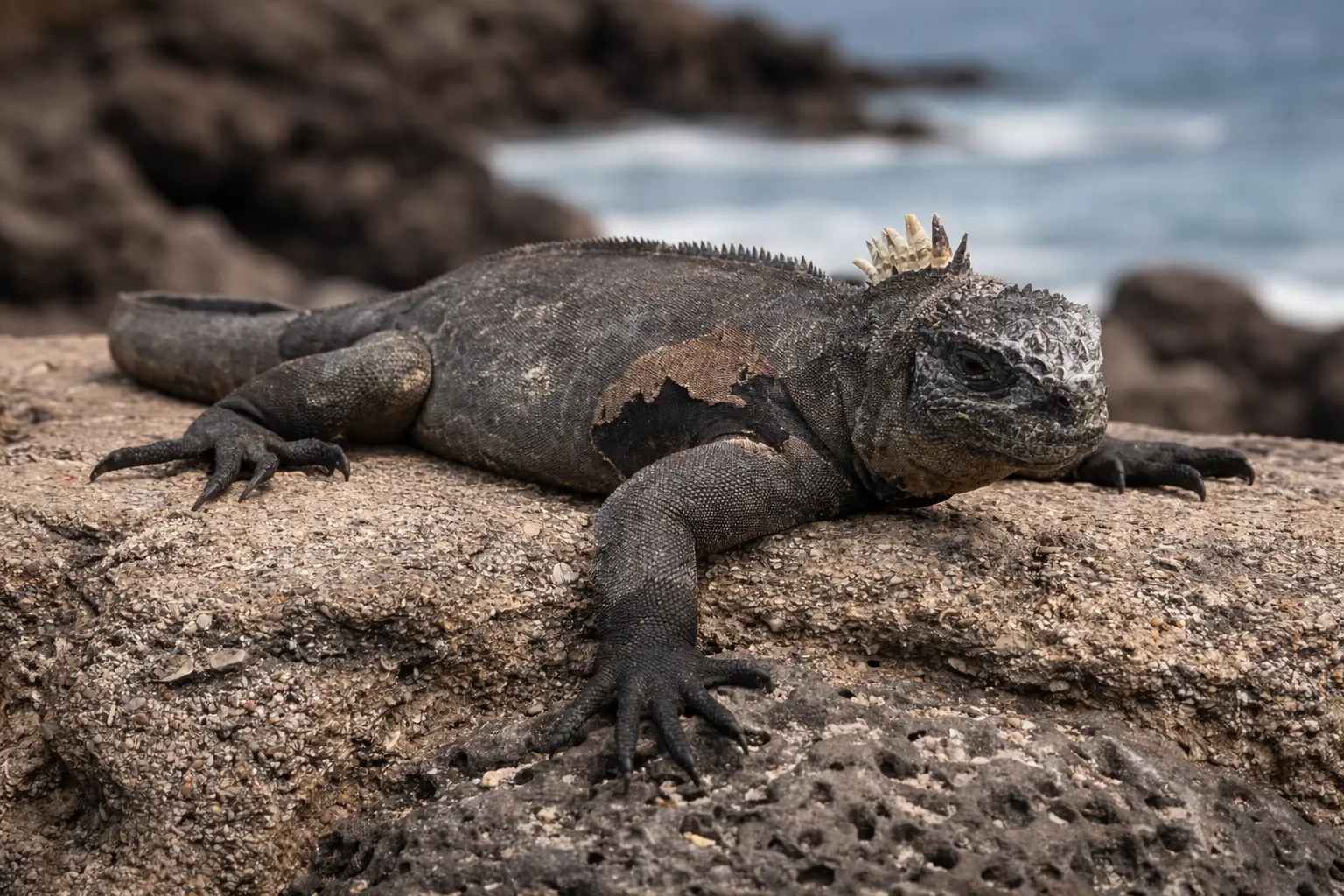
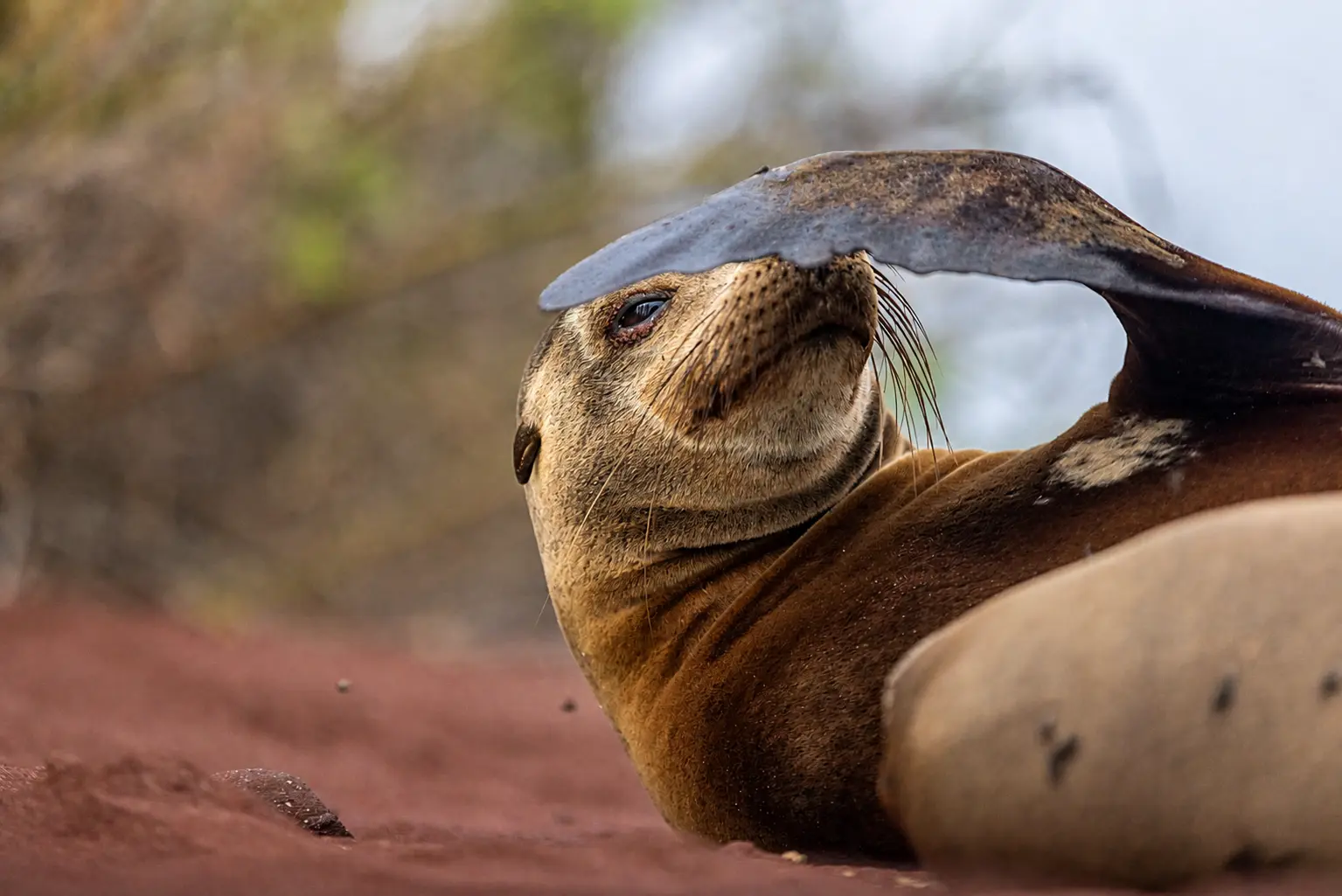
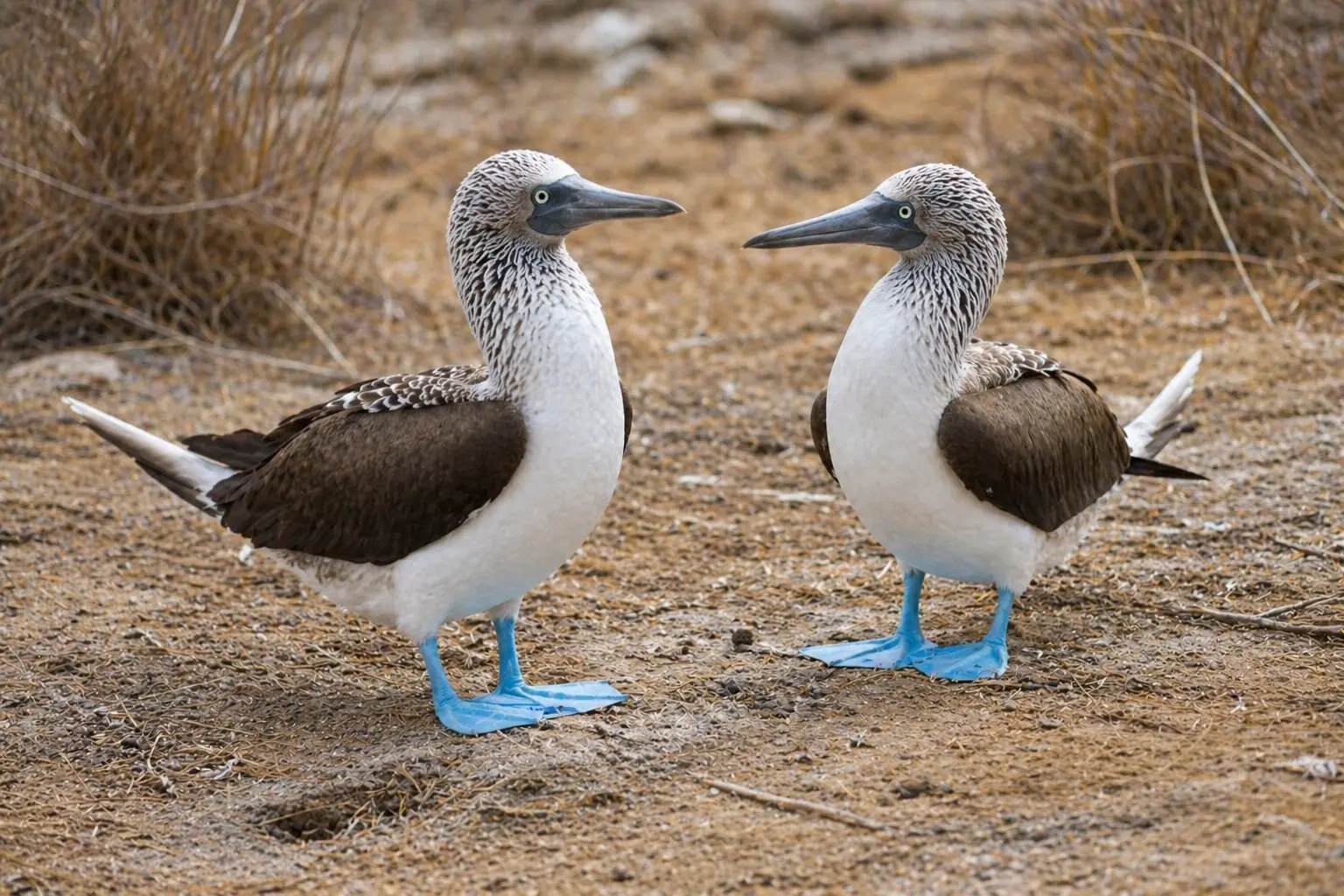
Just after sunrise on a lava-fringed shore, a sea lion lies asleep beside the path while visitors pass a few meters away. Nearby, a marine iguana stays motionless on black rock, soaking up the first warmth of the day. Overhead, a blue-footed booby watches from its perch without taking flight.
For many first-time visitors, the reaction is immediate: why are the animals here so unafraid?
The answer begins with the islands themselves. Galápagos is an oceanic archipelago that was never connected to the mainland. For long stretches of their history before human settlement, many native species lived without the land-based mammalian predators common in continental ecosystems. That shaped behavior in ways that still define the visitor experience today.
A wildlife community shaped by isolation
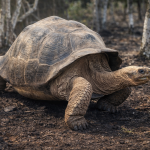
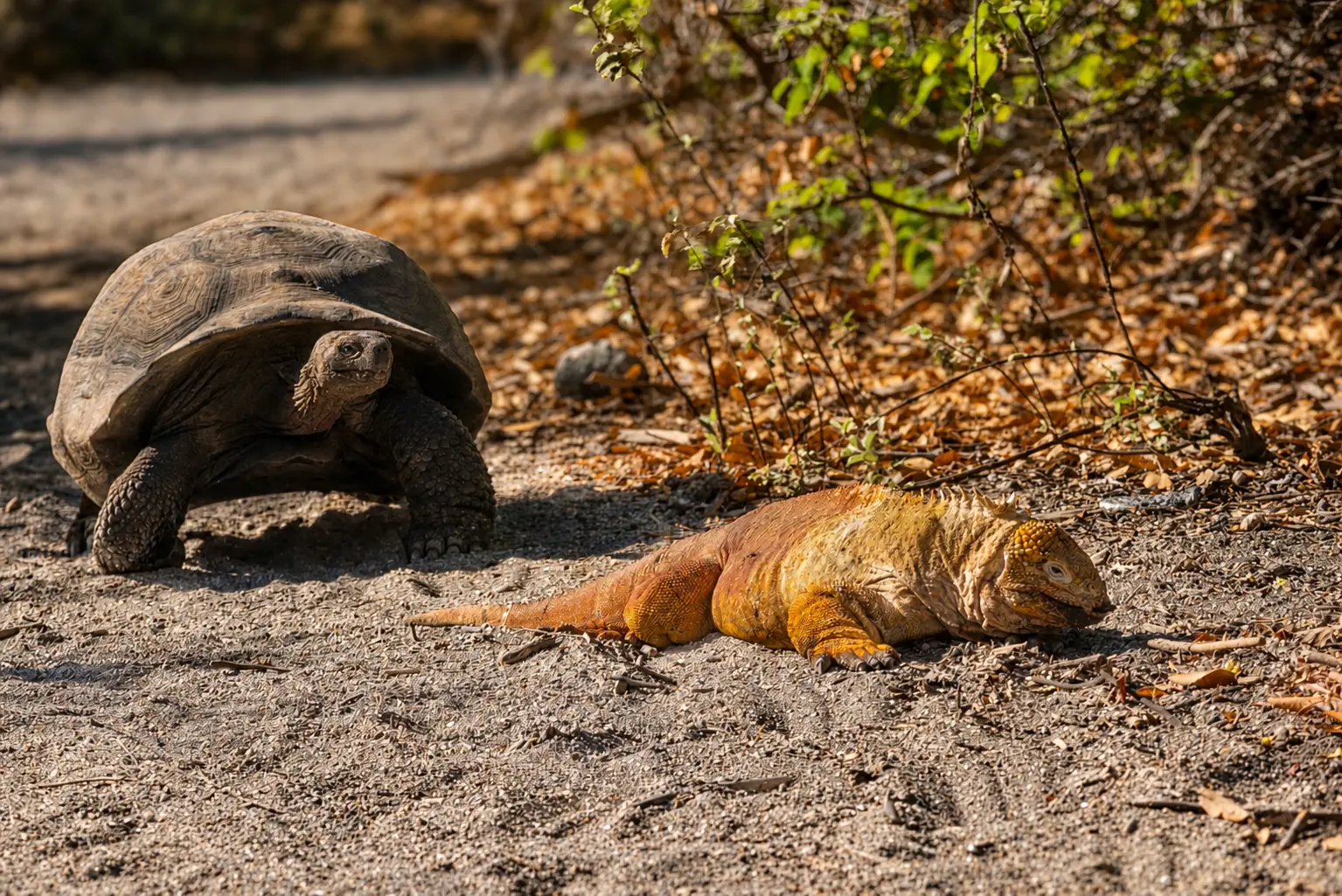
On continents, many animals survive by staying alert and fleeing fast. In Galápagos, that pressure was historically different. Before humans arrived, many birds, reptiles, and tortoises lived without native land-based mammalian predators moving across the landscape. In that setting, constant flight was often less necessary.
Scientists call this island tameness: a pattern seen on remote islands where animals often allow a much closer approach before fleeing, especially where predator pressure has remained low for long periods. That does not mean Galápagos wildlife is unaware. It means many species were shaped in an ecological setting where conserving energy often mattered more than reacting to every unfamiliar presence.
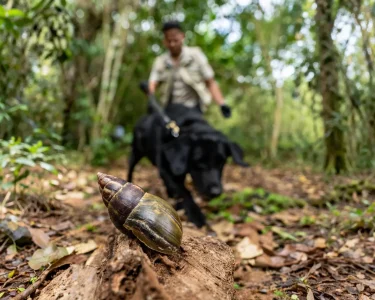
But that historical calm should not be confused with safety today. Introduced species — including feral cats, rats, dogs, pigs, and goats — have altered island ecosystems and remain a serious threat to many native species. Some prey on eggs, chicks, or young animals; others damage vegetation and habitat. The same trust that makes Galápagos wildlife so extraordinary also makes it vulnerable.
Why fear is not always useful
Fear has a cost. Staying on high alert burns energy. So does running, diving, or abandoning a nest. In a place where the threat landscape was historically narrower for many species, there was less reason to spend precious energy on constant escape.
That energy could go elsewhere: feeding, courting, nesting, basking, or raising young. Seen that way, the calm many visitors notice in Galápagos is not softness. It is efficiency.
Not friendliness — and not permission
This is the point that matters most: the apparent fearlessness of Galápagos animals is not a sign that they want interaction. It is not friendliness. It is not domestication. And it is not an invitation to come closer.
Many animals here do not respond to humans the way wildlife on continents often does because humans are relatively recent in the deeper ecological story of the islands. Charles Darwin noted the unusual tameness of Galápagos wildlife during his visit to the islands, and that impression remains one of the archipelago’s most distinctive biological traits.
Today, that same trait helps explain both the wonder people feel here and the rules that must protect it.
The stress you may not see
Stillness can be misleading.
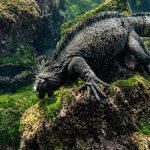
An animal that does not move may still be under pressure. Research on Galápagos marine iguanas found that heart rate can rise sharply in response to threat, showing that outward calm does not always reflect what is happening inside the body. Other studies have shown that human disturbance can affect physiological responses even when visible behavior appears restrained.
That matters because people often assume that if an animal stays put, it is comfortable. Not necessarily. In Galápagos, visible stillness and physiological stress can exist at the same time.
Why this makes island wildlife more vulnerable
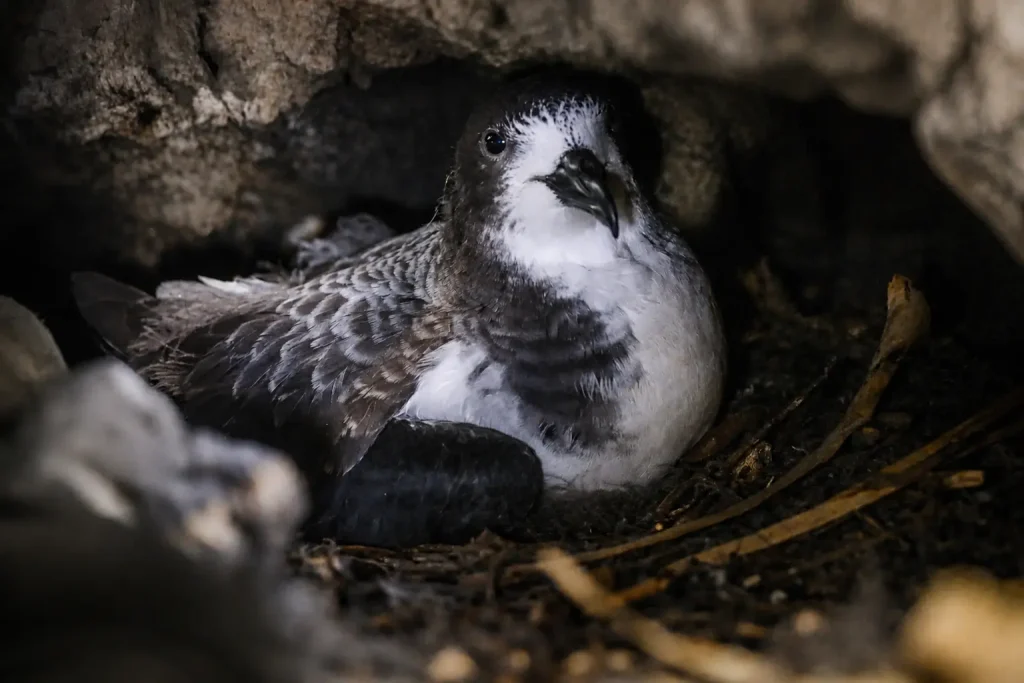
The same history that helps explain this calm also helps explain vulnerability. Animals that developed without strong exposure to mammalian predators are often less prepared when those predators arrive.
In Galápagos, introduced predators such as feral cats, rats, and dogs have affected native wildlife and nesting success across the archipelago, while other introduced species, including goats and pigs, have transformed vegetation and habitat. This is one of the hardest lessons of island ecology: traits that once made sense in a protected system can become liabilities when the system changes.
That is why the fearlessness of Galápagos wildlife is not just an interesting fact. It is part of the reason strict protection is necessary.
Why the distance rule matters
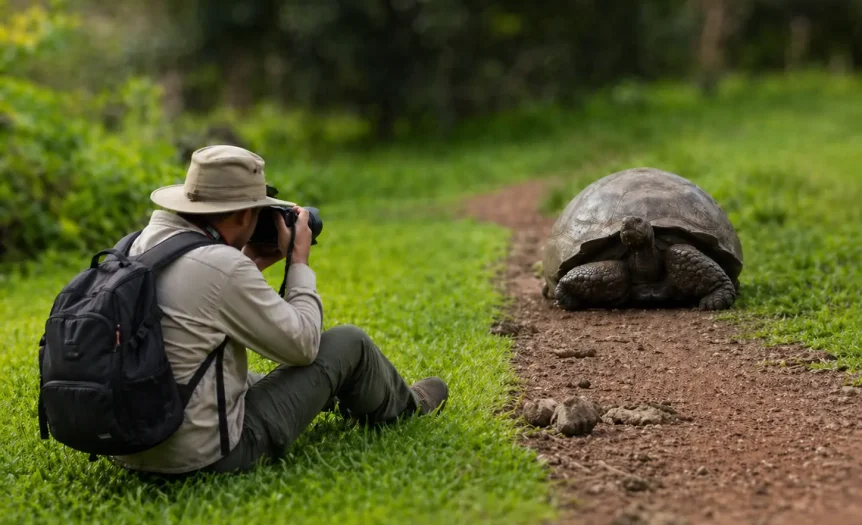
The familiar two-meter rule in Galápagos National Park is not symbolic. It exists because many animals will not create enough distance on their own. Visitors are therefore asked to do what the wildlife often will not: step back first.
Official park guidance requires people in protected areas to remain on marked trails, keep their distance from wildlife, and avoid any behavior that adds stress or disturbance. Visits to protected sites are also regulated through authorized naturalist guides, whose role helps make close but respectful wildlife observation possible.
Biology helps explain the behavior. Management helps protect it. The rules established by the Galápagos National Park Directorate, together with field controls and the presence of naturalist guides, help protect animals whose behavior does not always provide its own buffer. Without those safeguards, the same calm that fascinates visitors could quickly become a source of greater stress and disturbance.
A culture of coexistence
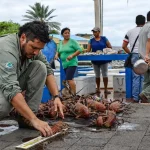
That ethic of restraint extends beyond park trails. In Galápagos, many children grow up learning that wildlife is not something to chase, touch, or crowd, but something to live alongside with care. That matters.
Across the inhabited islands, that culture of coexistence reinforces what the rules require in protected areas: respect, distance, and restraint. This is one of the quiet strengths of life in Galápagos: the understanding that closeness to nature is a privilege, not permission.
A different kind of closeness
The nearness people feel here is real. A sea lion sleeping beside a dock. A booby standing at eye level. A marine iguana holding its ground on warm lava. These are some of the moments that make Galápagos unforgettable.
But what makes them possible is not human access alone. It is a deeper ecological history shaped by isolation, historically low predator pressure, and the singular conditions of island life. It is also the result of decades of protection, clear visitor rules, naturalist guidance, and a local culture that has learned to live with wildlife without treating it casually.
That history produced one of the archipelago’s most remarkable qualities: wildlife that often appears calm in our presence. It also created a greater human obligation.
In Galápagos, the animals’ stillness is part of what makes the islands extraordinary. It is also one of the clearest reasons we must move through them with greater care, not less.