

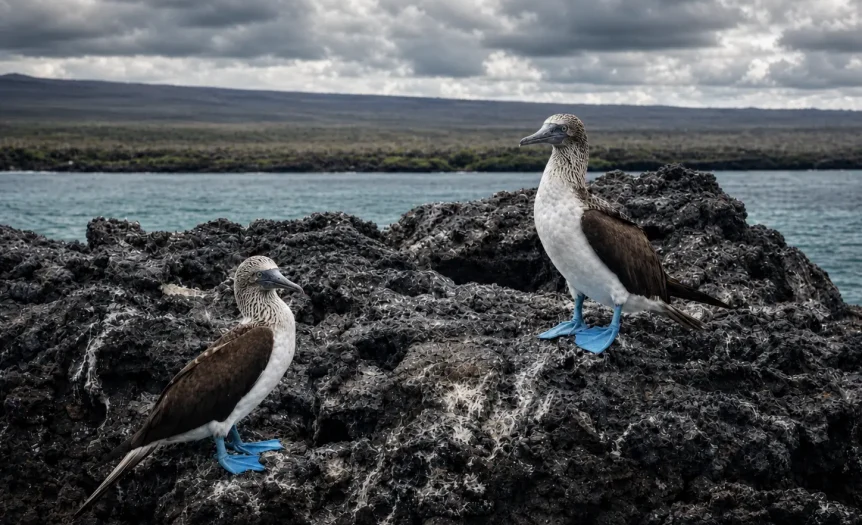
A blue-footed booby does not need much help getting attention.
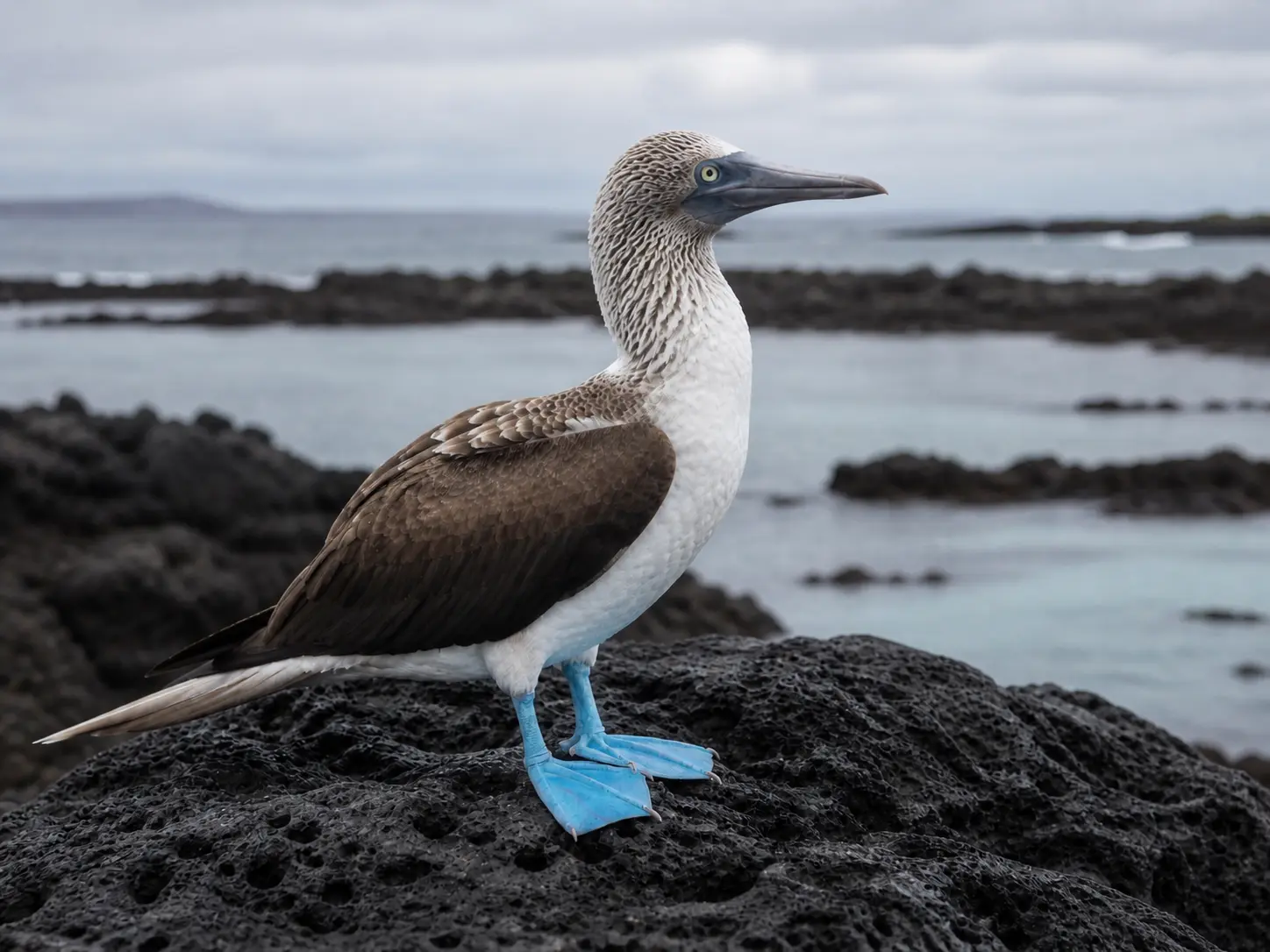
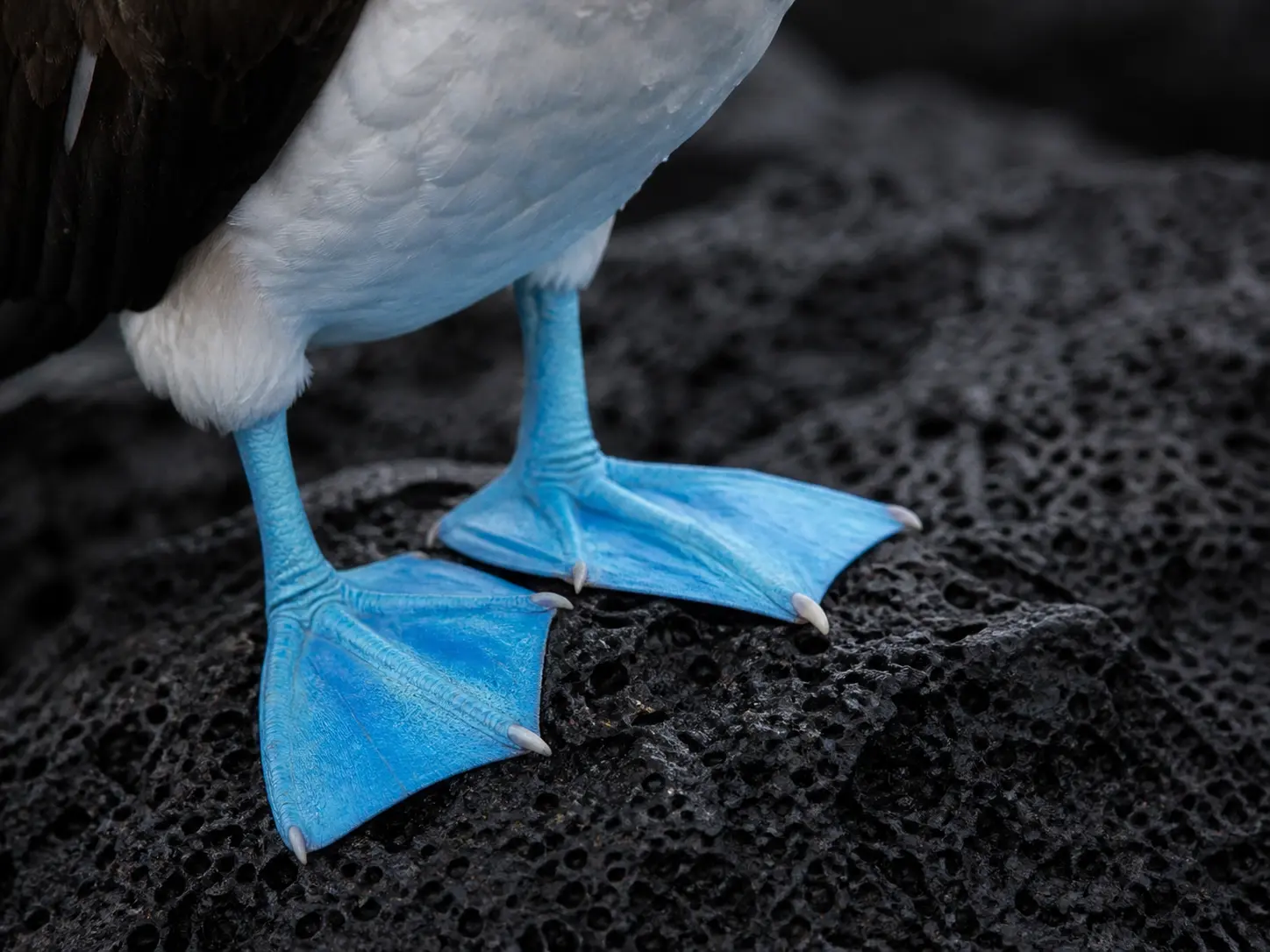
It can be standing quietly on a patch of lava, looking almost serious, until your eyes drop to its feet. Bright blue, sometimes turquoise, sometimes deeper and richer, they seem almost too vivid for a wild bird. In Galápagos, they are one of the details visitors remember first.
But the color is not just decoration.
For blue-footed boobies, those feet are part of a visual language. They can signal what the bird has been eating, how strong its condition may be, and how ready it is to attract a mate.
A color that begins at sea
The story of the blue feet begins far from the nesting ground, in the ocean.
Blue-footed boobies are seabirds. They feed in coastal waters, diving for small fish such as sardines and anchovies. These fish provide nutrients and pigments that can influence the color of the birds’ feet. Among the most important are carotenoids, natural compounds that birds obtain through food.
Carotenoids are not just color ingredients. In birds, they are also linked to body condition and immune function. That means a bright color can carry information. A bird must be healthy enough to use those compounds for display while still supporting its own body.
In blue-footed boobies, the color is especially fascinating because it is not only pigment. Research has shown that the blue appearance also depends on the structure of the skin. Tiny arrangements in the tissue help create the color we see.
The result is one of the most recognizable signals in Galápagos wildlife: feet that can shift from pale blue-green to a vivid, almost electric blue.
Blue feet can say something
To people, the feet may look funny or beautiful. To another booby, they may say something important.
Studies have shown that foot color can change with the bird’s current condition. In one experiment, male blue-footed boobies developed duller feet after a short period without food. When they were fed fresh fish again, the color became brighter.
That matters because it suggests the blue is not simply a permanent feature. It can reflect what is happening in the bird’s body.
A brighter color may indicate that a bird is well fed and in better condition. A duller color may suggest stress, lower food intake, or weaker physical condition. The signal is not perfect, and nature rarely works in simple guarantees. But in blue-footed boobies, foot color can offer a visible clue during the search for a mate.
The courtship dance has a purpose
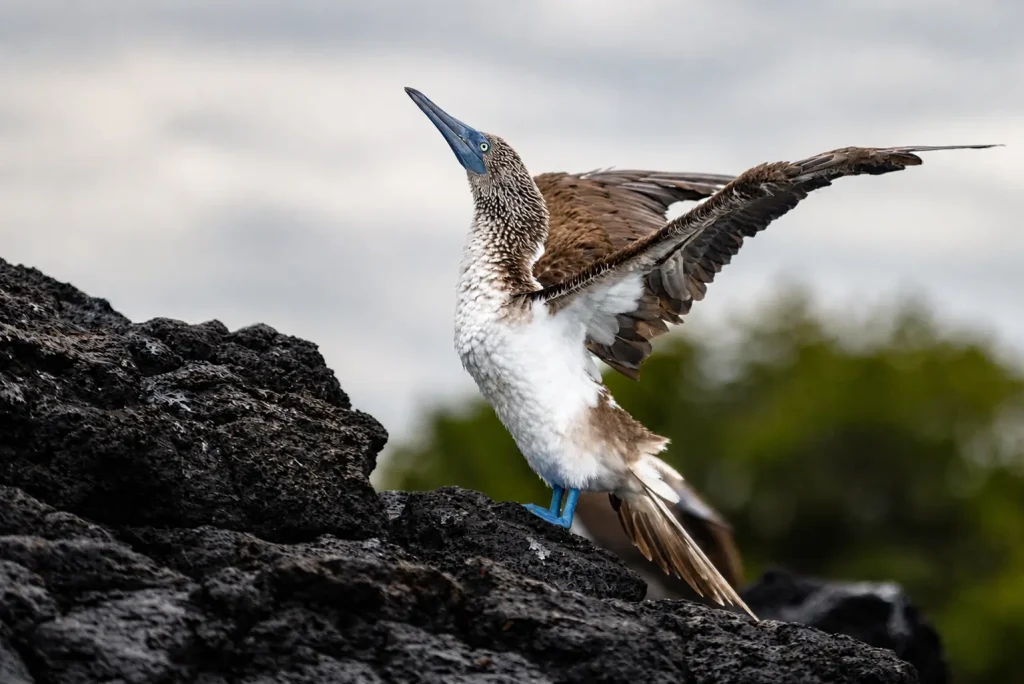
The famous blue-footed booby dance often makes people smile.
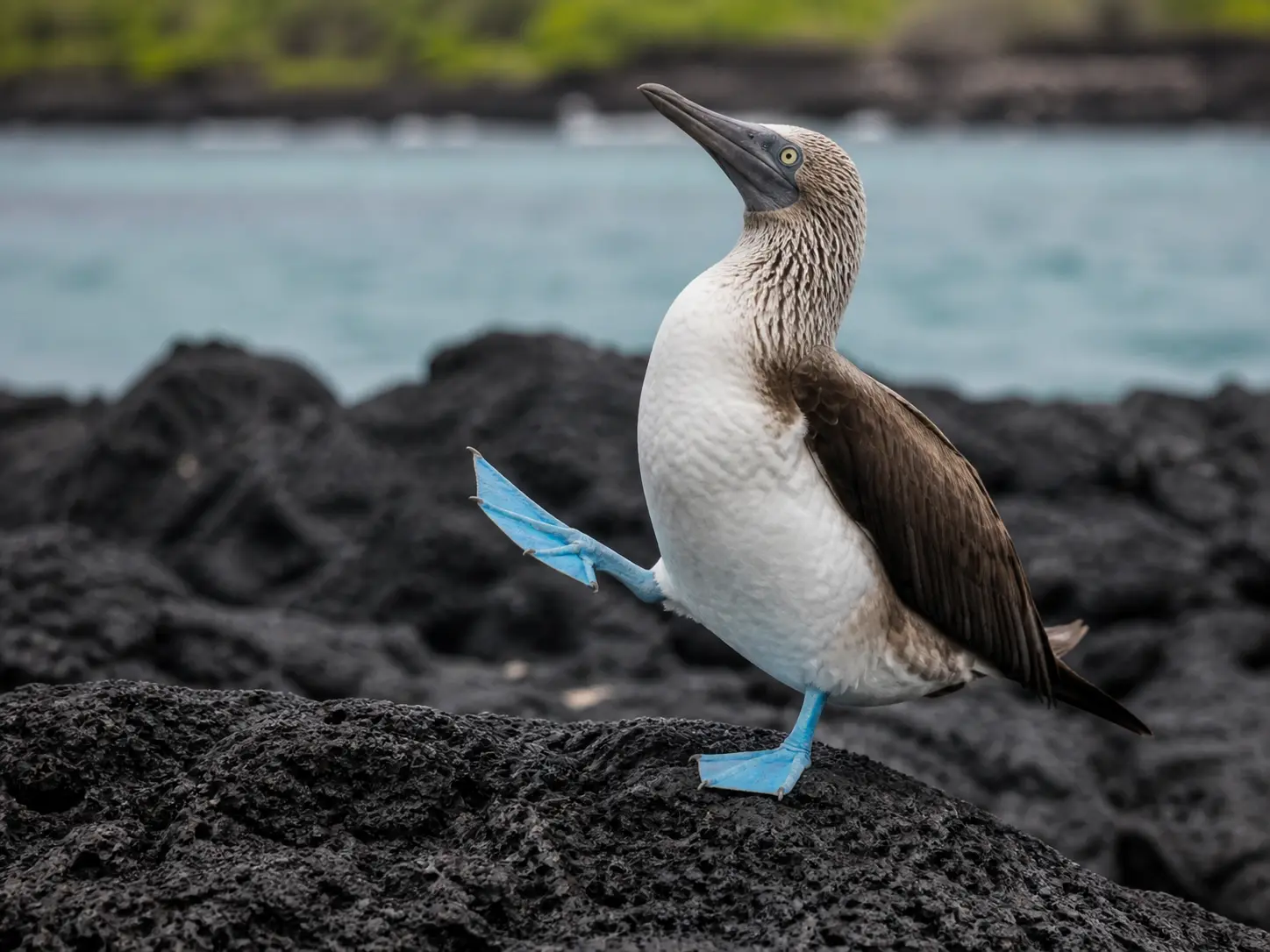
A male lifts one foot, then the other, stepping slowly in front of a female. He may point his bill toward the sky, spread his wings, whistle, and offer a small stone or piece of nesting material.
It can look playful. But it is serious business.
Each step shows the feet. Each lifted foot makes the color more visible. The dance gives the female a chance to assess the male, not only by his movements, but also by the condition suggested by his color.
In that moment, the feet become more than a striking feature. They become part of courtship — a signal of health, energy, and reproductive potential.
Females are not the only ones watching
The signal may work in both directions.
Research suggests that males also respond to the color of female feet. Females with duller feet may receive less courtship attention, suggesting that foot color can influence attraction in both sexes.
That makes the blue feet even more interesting. They are not simply a male ornament displayed for females. They are part of a two-way visual conversation between potential mates.
This changes how we understand one of Galápagos’ most famous birds. The feet are not a comic detail attached to a seabird with a memorable name. They are a biological signal shaped by food, condition, and reproductive behavior.
What the ocean has to do with it
In Galápagos, the blue feet also tell a larger story.
Blue-footed boobies depend on productive waters and small schooling fish. When prey is abundant, adults can feed well and breeding colonies have a better chance of producing chicks. When key fish become scarce, the effects can reach the nesting grounds.
That connection is especially important in Galápagos. Although the blue-footed booby is considered a species of Least Concern globally, researchers have raised concerns about the Galápagos population, where poor breeding has been linked in part to changes in food availability.
In other words, the color of the feet is not only about the individual bird. It points back to the health of the marine system that supports it.
A bright foot begins with a living ocean.
More than a Galápagos icon
The blue-footed booby is one of the most recognizable animals in Galápagos. Its name is unforgettable. Its walk is charming. Its feet seem almost unreal.
But behind the color is a precise natural message.
The blue feet are not decoration. They are connected to diet, body condition, courtship, and mate choice. They show how even the most playful-looking details in wildlife can carry information.
In Galápagos, that is often the deeper lesson. What first looks like beauty may also be biology. What first makes us smile may also reveal how closely life on the islands is tied to the sea.
The question, then, is not only why blue-footed boobies have blue feet.
It is what those feet are telling us.